 India
India How one farmer is changing pest control in Punjab, Pakistan
This story is part of OCA’s contribution to the International Year of the Woman Farmer 2026.
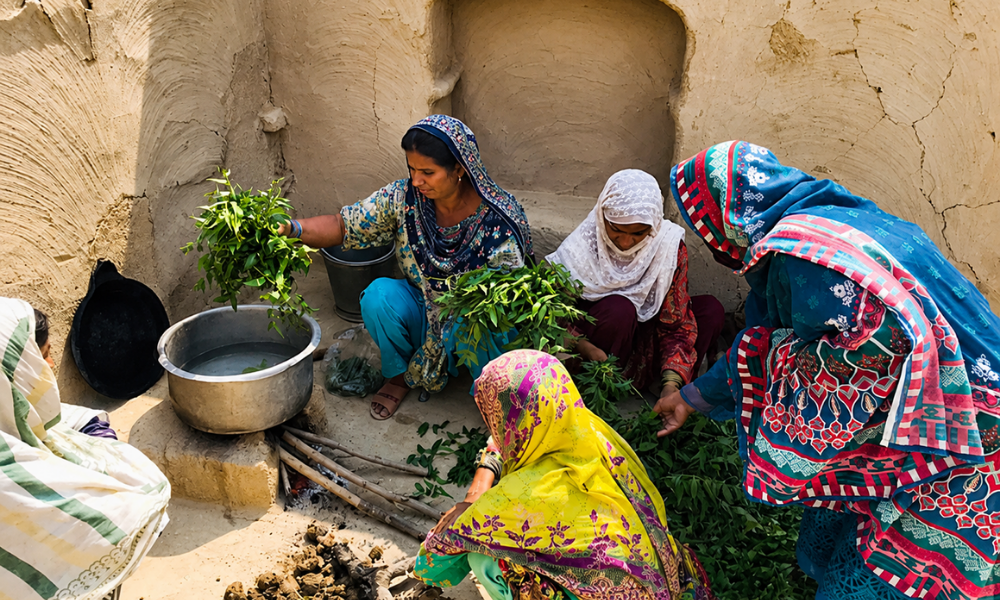
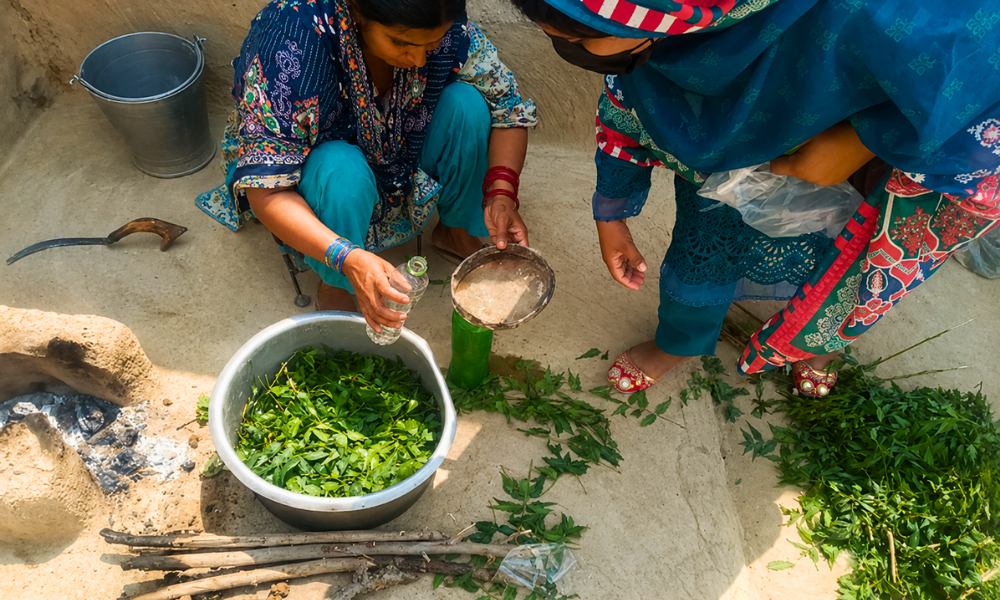
Samina Bibi crouches beside a metal basin in the courtyard of her home in Tehsil Layyah, sorting fresh neem leaves from a pile of dark green Kaur tuma cuttings. Around her, a handful of women from her farmer group wait their turn with the same task: strip the leaves, boil them down, let the mixture sit for a few days, then strain it into a bio-pesticide that will go on the cotton instead of the chemical sprays most of them grew up using.
Neem, the leaves and seeds of the Azadirachta indica tree, has been used across South Asian farming for generations for its natural insect-repelling properties. Kaur tuma, known more widely as bitter apple, grows wild around the village and has a long history as a local pest deterrent. Samina had heard both mentioned in the training sessions on integrated pest management organised by OCA, RBDC and Kay & Emms but it was her own experimenting at home that turned them into something she could actually use.
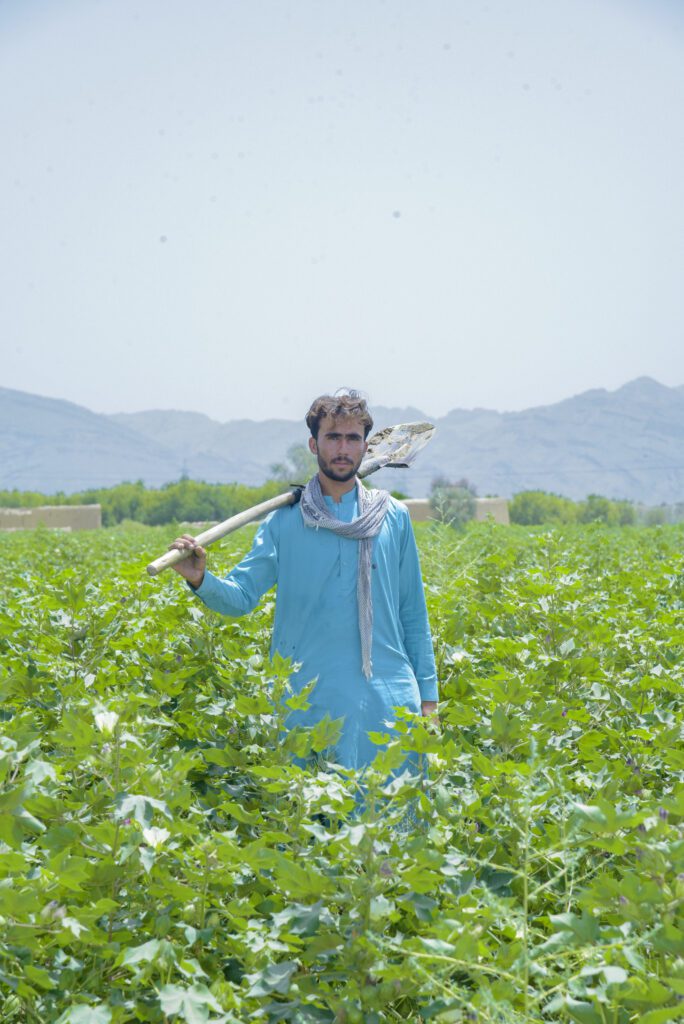
Samina is 47 and has farmed cotton for most of her life. She’s one of the farmers that OCA supports in Pakistan as part of its Farm Programme. For years, like most farmers in her community, she used synthetic pesticides because that was what everyone did. She watched the costs climb every season, and she noticed the soil felt different under her feet than it had when she was younger.
I did not wait for someone to save my farm. I looked at the neem tree, I looked at the Kaur tuma plant, and I found my answer right there.
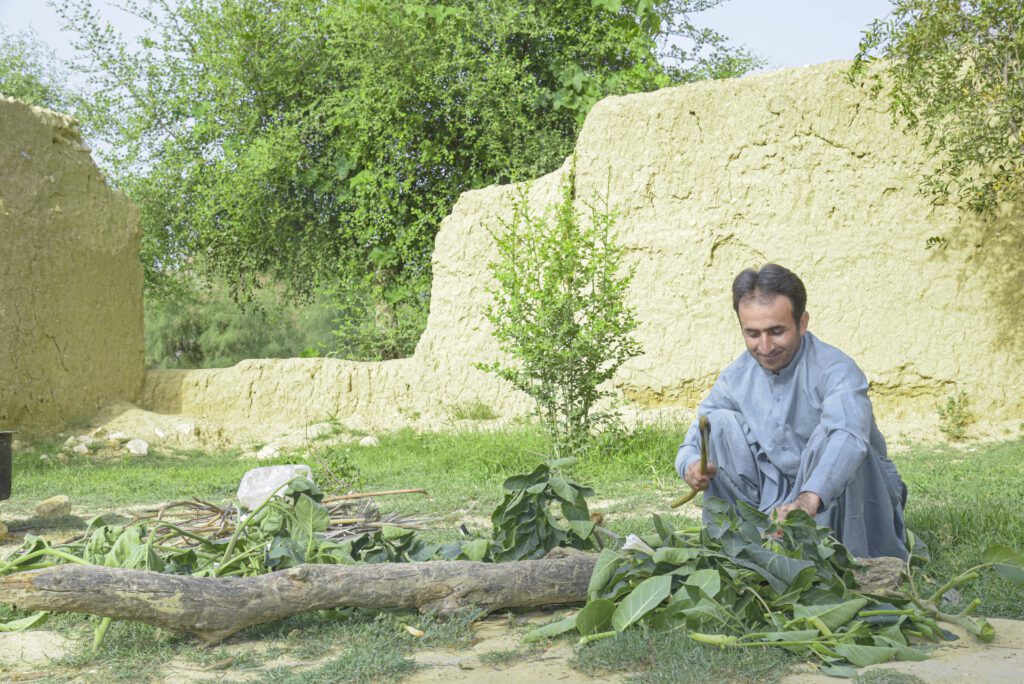
Her method is simple enough to repeat without any special equipment. She collects fresh neem leaves and tuma plant material, boils them together until the water reduces by half, then ferments the mixture for two to three days in a covered container. Once it’s strained to remove the solids, she dilutes the liquid and sprays it on her cotton at the growth stages when pests are most likely to strike.
Pest pressure has dropped, and Samina says what she spends on pest control has fallen by roughly 40 percent. Her farm now runs without synthetic chemicals at all, something that would have felt out of reach a few years ago.
When I see other women preparing bio-pesticide now, I feel as if my whole life’s work has found its meaning.
What’s harder to put a number on is what happened after word got around. Other farmers in her community started showing up at her farm to watch her prepare the mixture and ask how it worked. Samina began walking them through it herself, plant by plant, batch by batch. OCA’s records note that she has informally trained more than twenty fellow farmers this way, most of them women who, like her, had spent years applying chemicals they didn’t fully trust.
That peer-to-peer knowledge sharing is, in some ways, the more interesting part of the story. Formal training sessions can teach a technique, but it’s the farmer down the road who’s already using it, and can show you exactly how, who tends to move a community faster. Younger women in the village have started taking a more visible role in decisions about how the group farms, something a few of the older members put down directly to watching Samina work.
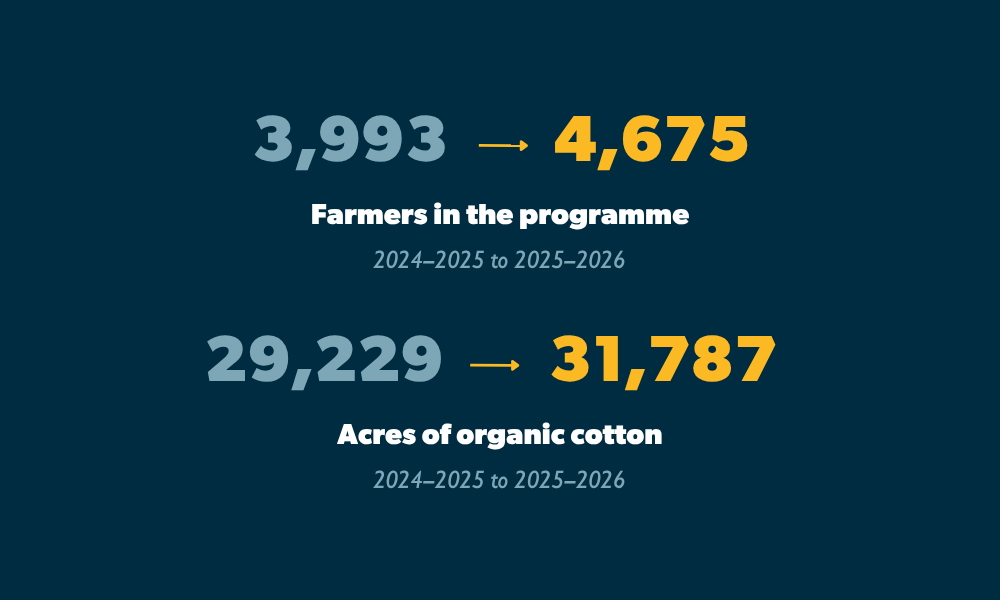
Tehsil Layyah sits in Punjab, Pakistan, one of the districts where OCA has been expanding its Farm Programme over the past two seasons. Across the province, alongside Sindh and Balochistan, farmer participation in the programme grew from roughly 3,993 to 4,675 between 2024-2025 and 2025-2026, with cultivated organic cotton area expanding from about 29,229 to 31,787 acres.
None of that growth depends on any single farmer’s innovation, but stories like Samina’s are part of what makes the transition period, often the hardest three years for a farmer moving from conventional to organic, feel more manageable for the people going through it.
She was solving a problem on her own farm with what was growing nearby. But in a world where the shift to organic can still feel uncertain, having a neighbour who has already made it work, and is willing to explain exactly how, counts for something that no training curriculum can fully replace.
None of that happens without industry backing the years farmers spend making that switch, not just buying the certified cotton on the other side of it. In return, brands and manufacturers get exactly what Samina’s group is building: traceable supply, grown by farmers with the knowledge and support to make organic work long-term.
See what OCA’s Farm Programme looks like on the ground, or find out how to join OCA.