Ask anyone who has spent time on an organic cotton farm whether the soil is healthier, and they will probably say yes. Ask them to prove it to a brand’s sourcing team, an auditor or a regulator, and the conversation gets harder. That gap ran through OCA’s October Learning Lab on climate resilience and biodiversity, the follow-up to an April session on social impact.
Ruud Schute, OCA’s Programme Director, explained why the gap matters more now. For years, companies could describe their cotton’s footprint with global averages. As sustainability reporting and claims face growing scrutiny, brands need more reliable and traceable evidence to understand and communicate environmental impacts. Farm-level data can help connect those impacts to specific places, practices and outcomes.
How long does soil take to change?
The clearest evidence came from West Africa. Dr Alex Stuart, International Project Manager for Agroecology at Pesticide Action Network (PAN) UK, manages the Growing Benin’s Organic Cotton Sector project, which has worked with farmers, implementing partner OBEPAB and the ginnery SODECO since 2021 [1]. In collaboration with the University of Abomey-Calavi and Dr Oliver Knox, a cotton soil scientist from Australia, the team compared organic fields with neighbouring non-organic ones in three ways: laboratory soil analysis, counts of earthworms and other soil organisms, and the buried-underwear test that featured in our May article on biodiversity.
That test has had quite a year. In August, researchers at the University of Zurich published a study in which around 1,000 citizen scientists buried cotton underpants in gardens, meadows and farmland across Switzerland [2]. Decomposition lined up well with laboratory soil results, and the authors proposed an “Underpants Index” as an easy way to read soil biological activity. In September the work won an Ig Nobel Prize. Alex sees the study as strong support for the method, and PAN UK now recommends it to OCA’s Implementing Partners.

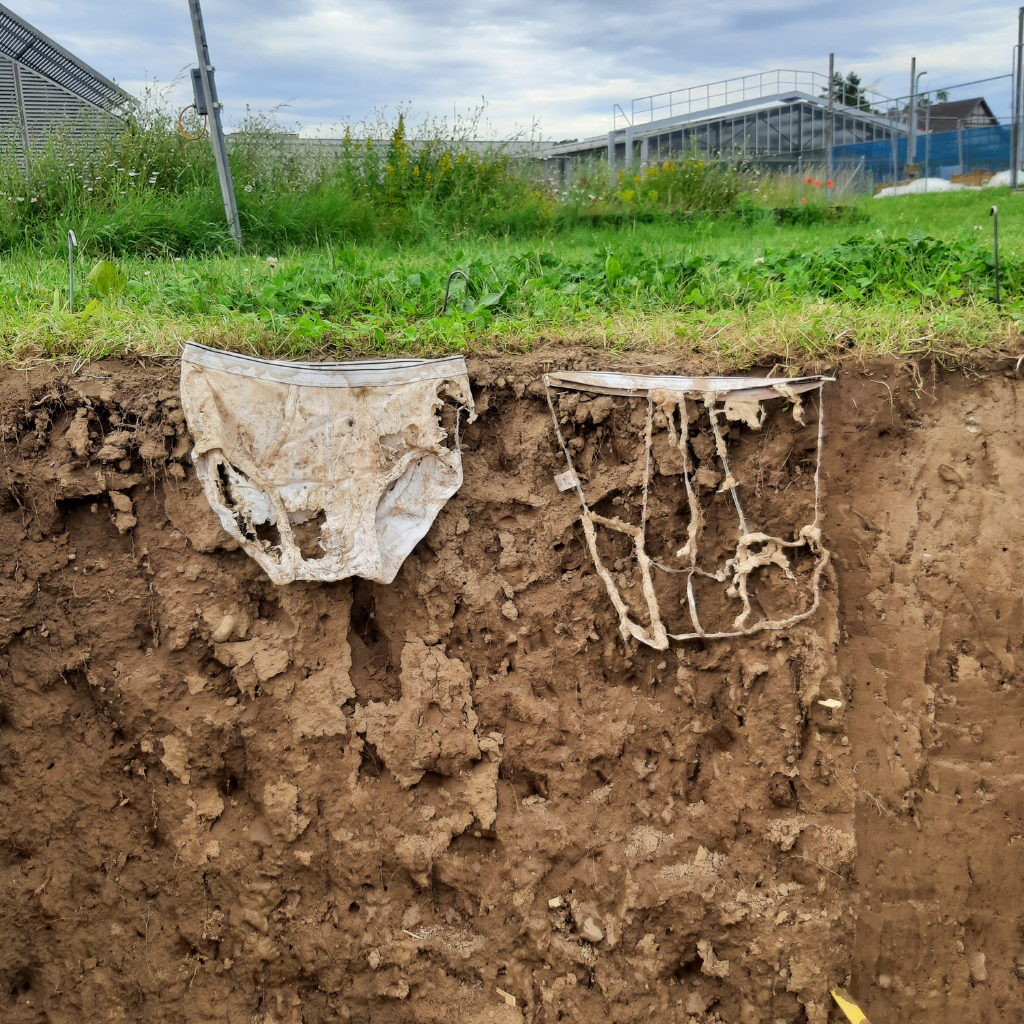
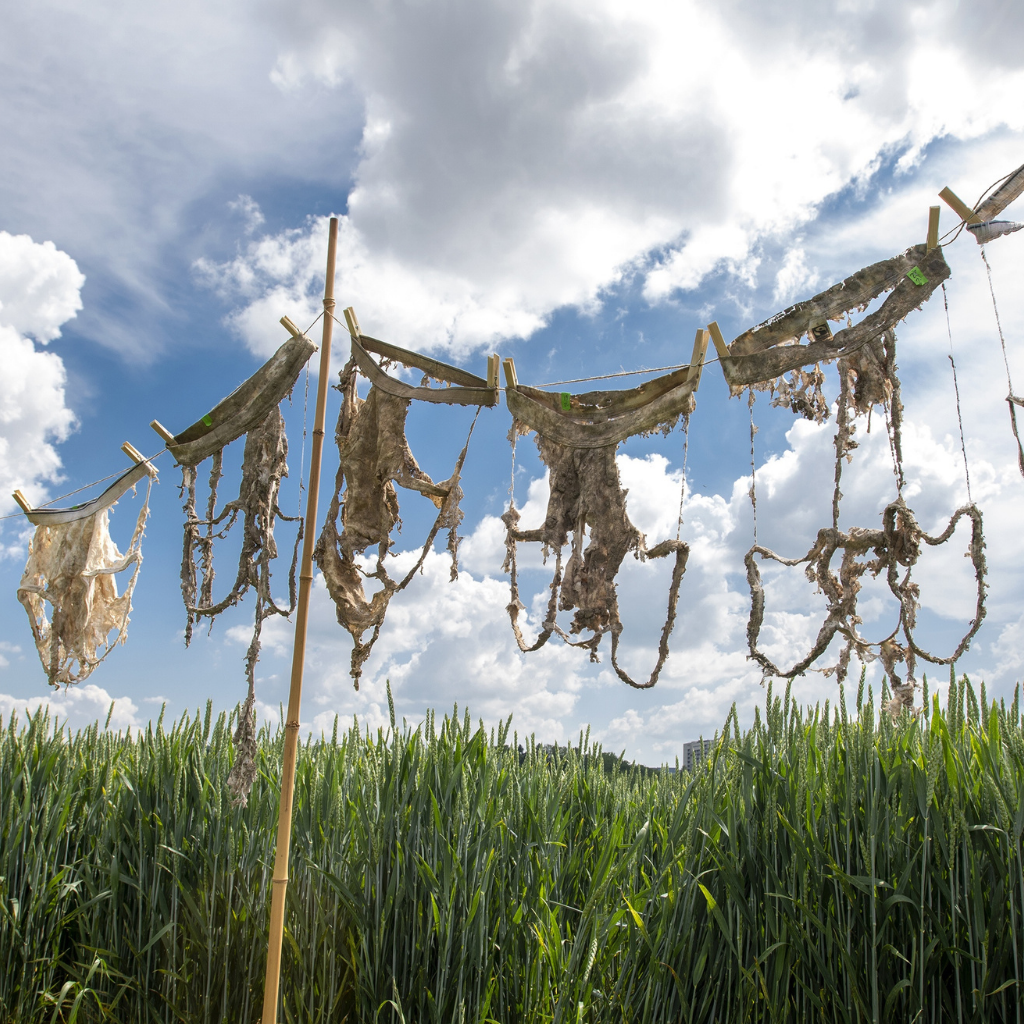
Photo credits by Nicolas Zonvi and Gabriela Brändle from the science project, led by the University of Zurich and Agroscope [2].
The Benin results are hard to ignore. In the fields sampled, organic soils contained on average 75% more soil organic matter, while buried cotton cloth showed 37% greater decomposition. Researchers also observed significant improvements in nitrogen levels, pH and water-holding capacity, alongside between two and thirteen times more soil macrofauna, depending on the region.
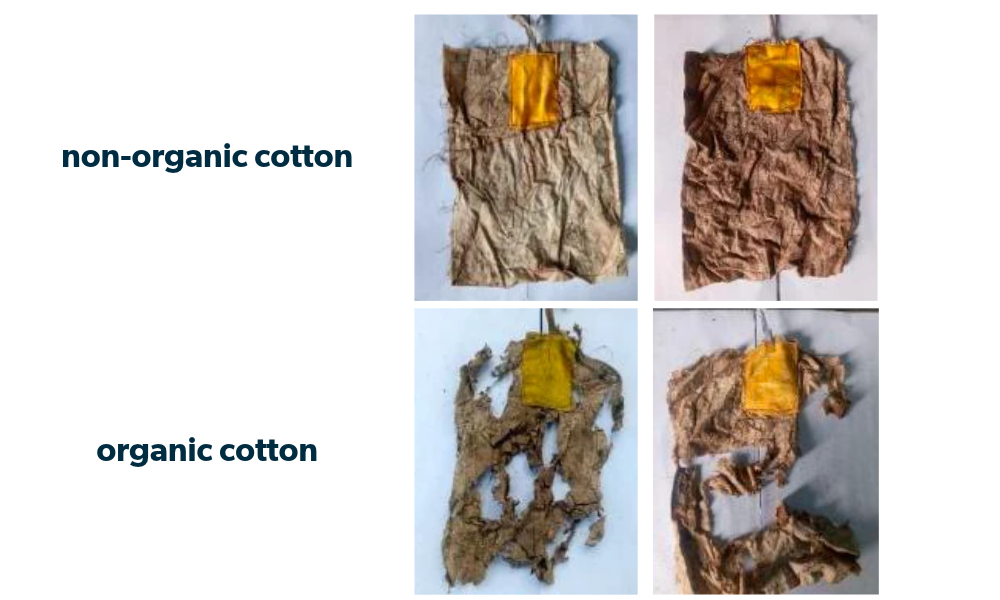
Photo credits by Alexander Stuart from Pesticide Action Network UK [1].
What about yields and farmer incomes?
Does organic cost farmers yield? In Benin, on average, yes, though it depends heavily on the region, and in some areas organic fields came out ahead. One factor may be access to improved cotton varieties. While conventional farmers have benefited from newer, higher-yielding and more drought-tolerant varieties, organic farmers have continued to rely on an older variety. Organic farmers there grow a cotton variety more than ten years old, while their conventional neighbours plant newer, higher-yielding, more drought-tolerant ones. Trials with the Benin Cotton Research Institute on recently released varieties, tested under organic conditions, gave around 20% higher yields. “It does highlight the need for research for organic farmers,” he said, “which is generally lacking.”
Income looks different. SODECO pays a fixed 20% premium for organic cotton; a price the ginnery sets itself and has held even when world premiums dip. Organic farmers also avoid rising fertiliser and pesticide costs. In a household survey from one season, total net farm income was around 60% higher for organic farmers. Building upon the project’s success, a USD 7 million grant from the Global Environment Facility has just been secured to bring organic cotton into the mainstream in Benin, working with the government and the conventional sector.
From field records to credible evidence
How do you turn what happens on a farm into evidence that a brand, an auditor or a regulator can rely on? That question is at the centre of the work of Chenyue Li, OCA’s Environmental Impact Officer. Her answer starts with a single farm data system, built on information collected directly from farmers and their fields, and put to four uses.
The first is cutting emissions. Organic farmers don’t use synthetic fertilisers or pesticides and don’t burn crop residues to clear land, so their farms start with lower emissions. Through UNLOCK, a project OCA runs with Future Earth Lab and implementing partners Vasudha and ASA in Madhya Pradesh and Gujarat. Those reductions are measured and verified as climate claims. Each farm is compared with its own three-year track record, so the question is simply whether that farm improved.
The second is storing carbon in the soil. Healthy soils pull carbon out of the air, but slowly, out of sight, and the gains can be lost again. To prove the gains are real, the same plots are sampled at the same point in each season, tested with the same laboratory methods and compared with nearby conventional farms over time. This follows the GHG Protocol’s new Land Sector and Removals Standard [3]. Under UNLOCK, farmers choose to take part, see their own results from the start and receive 100% of the sale price of each unit of one tonne of CO2 equivalent. They also sit outside OCA’s other programmes, so nothing is counted twice.
The third is measuring the footprint of the fibre itself. OCA’s lint cotton life cycle assessment (LCA) for India calculates the environmental impact of organic cotton fibre across 16 categories, from climate change to water use. It uses real farm data rather than global averages, which gives brands a more accurate figure for the cotton in their own supply chain.
The fourth is the OCA Farm Programme, a yearly health check that goes beyond carbon to soil, water and biodiversity. Implementing partners collect the data locally, OCA sets the standard and monitors it, and an accredited certification body checks compliance. Throughout, farmers keep ownership of their own data.
What ties the four together is location. Fields are mapped as polygons, each with their own ID and details such as whether cotton is intercropped, so a result can be traced back to a real piece of land. For brands, that makes it possible to see where their cotton comes from and to check that no natural land has been converted to grow it.
Where the data runs thin
Not every part of the picture is equally developed, and OCA is open about that. When one participant asked whether OCA has a standard method for biodiversity data, Ruud explained that climate and social impact have clear, widely used frameworks. For biodiversity, those frameworks are still taking shape across the whole sector.
OCA is building its data in step with that. Information on farming practices, inputs and climate is already collected and validated every season. Baselines for soil and water are set, with new soil data expected in early 2027. Biodiversity, Ruud said, “is the area which we’re now filling in”. Indicators are being designed around crops, trees, insects and making sure no land is converted. The aim is to report what can be measured well and to keep building where the evidence is still coming in.
Jennie Granström, Biodiversity and Ecosystem Impact Lead at H&M Group, said brands run into the same limits. Soil organic matter can be measured precisely. Data on species above ground is still largely qualitative, built from what farmers notice, insect traps and camera records. The point, she said, is to be clear about the quality behind every number.
What a brand does with it
This spring H&M Group published land targets set with the Science Based Targets Network (SBTN) framework [5]: no conversion of natural ecosystems, regeneration and restoration of working land, and engagement in priority landscapes. SBTN’s latest update broadened the second target to cover land quality as well as land area, so soil organic carbon, erosion and acidification can now count. For Jennie, this is where the real change lies. Brands are moving from tracking what programmes do to understanding what changes as a result. Training farmers is an important activity, but it doesn’t show whether soil health or biodiversity has improved. Showing that takes evidence of outcomes, measured in the field over time.
Data is needed to back up claims, she said, but the people who matter most are the ones doing the work. “The most important stakeholders are the farmers and the implementers,” she said, “as the data will give them the tools to improve the methods and practices used.”
What comes next
So, can the benefits of organic cotton be proven? Increasingly, yes, though important gaps remain. The soil studies in Benin are showing clear differences between farming systems. OCA’s farm-level measurement is making environmental data more traceable, and new biodiversity indicators aim to capture changes that have so far been hard to quantify.
The next step is to build on this evidence over time. In Benin, the same fields will be sampled again next year to show how individual plots change. OCA expects new soil data from the Farm Programme in early 2027, and will share the latest season’s results at its Farm Programme insights webinar in December. Each new round of data helps brands make more credible claims, helps programmes learn what works, and helps farmers see the value of the practices they’ve adopted.
References:
- [1] Pesticide Action Network UK. Growing Benin’s Organic Cotton Sector project. https://www.pan-uk.org/cotton-in-benin/
- [2] Bender, S.F., van der Heijden, M.G.A. et al. (2026). Soil Health Assessment Using Buried Cotton Underpants with the Help of 1000 Citizen Scientists. Plants, People, Planet. University of Zurich news release: https://news.uzh.ch/en/articles/media/2026/buried-underwear.html
- [3] GHG Protocol (2026). Land Sector and Removals Standard. https://ghgprotocol.org/land-sector-and-removals-guidance
- [4] Organic Cotton Accelerator (2025). Life cycle assessment of lint cotton in India, conducted by South Pole.
- [5] Science Based Targets Network. Step 3: Land targets. https://sciencebasedtargetsnetwork.org/companies/take-action/v2-guidance-2026/