This summer, Brussels gave OCA and others across the cotton value chain an important opportunity to help shape the future of corporate due diligence.
The European Commission ran a public consultation on the implementation guidelines for the Corporate Sustainability Due Diligence Directive (CSDDD). This EU due diligence law requires large EU and non-EU companies with a significant presence in the EU market to identify, prevent, mitigate, and address human rights and environmental harms across their operations, subsidiaries, and value chains.
CSDDD requires large companies to identify and address human rights and environmental risks across their full supply chain, including smallholder farmers at the deepest tiers.
Why this consultation matters
For OCA and our Contributors, this is important because due diligence will only be effective if it helps identify and address risks in practice, particularly those faced by organic cotton farmers, workers and farming communities.
The European Commission’s guidelines, expected in the first quarter of 2027, are intended to give companies, public authorities, and other stakeholders practical direction on implementing the Directive.
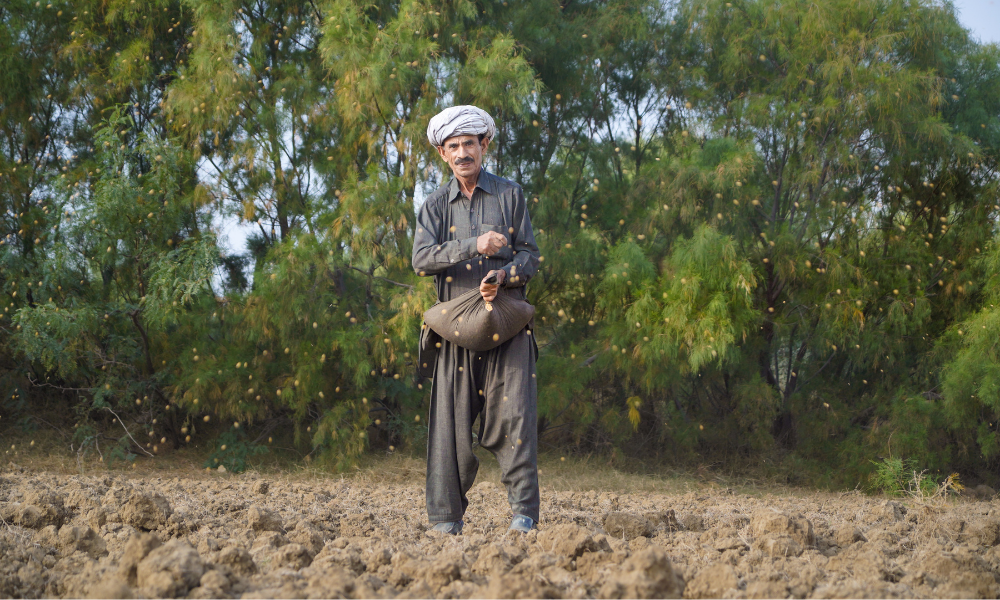
Although the guidelines will need to apply across many sectors, we felt it was important that they also reflect the realities of organic cotton production. Existing due diligence guidance often focuses on tier 1 and tier 2 suppliers, while the deeper tiers—where many of the most significant risks are found—can remain largely invisible.
At OCA, we saw the consultation as a chance to bring those realities into the conversation and to promote a more inclusive understanding of what meaningful due diligence looks like in practice.
Making sure farm-level voices are heard
We were conscious that farmers and other field-level actors might be underrepresented in the consultation. To help address this, OCA prepared its own response and encouraged partners and key actors across the cotton supply chain to participate directly.
Every perspective has something important to contribute. Whether it’s from a global fashion brand, a supplier, a farmer organisation, a civil society group, or another field-level partner, our Contributors’ experience helps shape guidance that reflects the full value chain, not just the parts that are easiest to reach.
Due diligence is not starting from zero. Responsible businesses and supply chain actors have been working on these issues for years, often alongside organisations such as OCA, long before due diligence became a legal requirement.
The legal obligations may be new, but the knowledge and experience are not. Legislation should build on the tools, partnerships, and initiatives that are already helping companies understand and address risks, rather than asking everyone to start again from scratch.
What we shared
Drawing on our experience developing and implementing OCA’s Decent Work Strategy, we highlighted several lessons.
First, collaboration is essential.
Multistakeholder initiatives, responsible sourcing programmes, and third-party verification schemes can help companies gain greater visibility across their supply chains, including at deeper tiers, where risks are often most difficult to identify.
Strong partnerships with local stakeholders, including companies, civil society organisations, farmer organisations, certification bodies, and governments, also make it easier to understand local challenges, prioritise action, and invest in solutions together.
No single company can address systemic issues alone. Collaboration is not an optional addition to due diligence; it is one of the conditions that makes meaningful progress possible.
Second, implementation must reflect the realities of farming communities.
In agricultural settings, structural barriers such as low literacy, limited connectivity, and the cost of data can make conventional due diligence approaches difficult to carry out. These realities need to inform how companies engage with stakeholders, establish grievance mechanisms, and ensure that people at farm level can access remedy in practice, not just in policy.
Due diligence cannot be a one-size-fits-all exercise. It needs to respond to local conditions and be developed with community-led initiatives that bring field experience, trusted relationships, and a long-term presence.
That kind of collaboration is what turns due diligence from a formal requirement into something that can work for people and communities on the ground.
Continuing the work together
OCA will continue supporting due diligence implementation in practice and advocating for legislation that is both ambitious and realistic.
For OCA’s Contributors, this means continuing to share what you are seeing and learning from the field. The experiences of farmers, local partners, suppliers, brands, and other value chain actors are essential to ensuring that future guidance reflects how due diligence actually works at farm level.
Read OCA’s previous position papers on the CSDDD here and here.