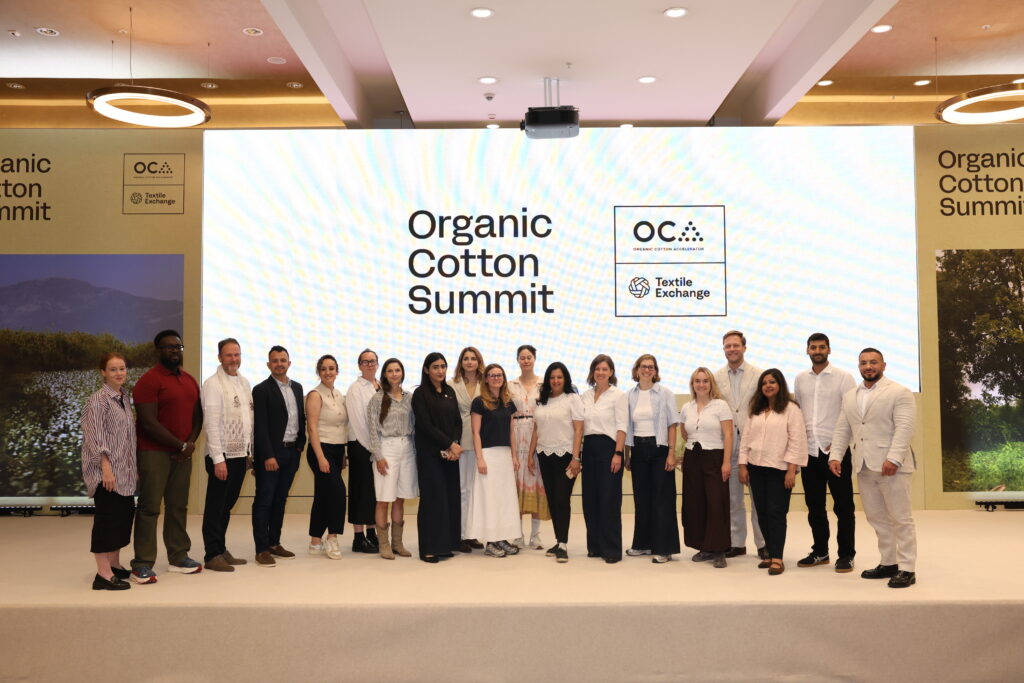
Istanbul, 4 June 2026 – At a time when global supply systems are facing increasing uncertainty, climate pressures, evolving regulatory requirements, and growing expectations around traceability and due diligence, the Organic Cotton Summit brought together an exceptional cross-section of the organic cotton sector in Istanbul this week, demonstrating the industry’s continued commitment to collaboration, resilience, and collective action.
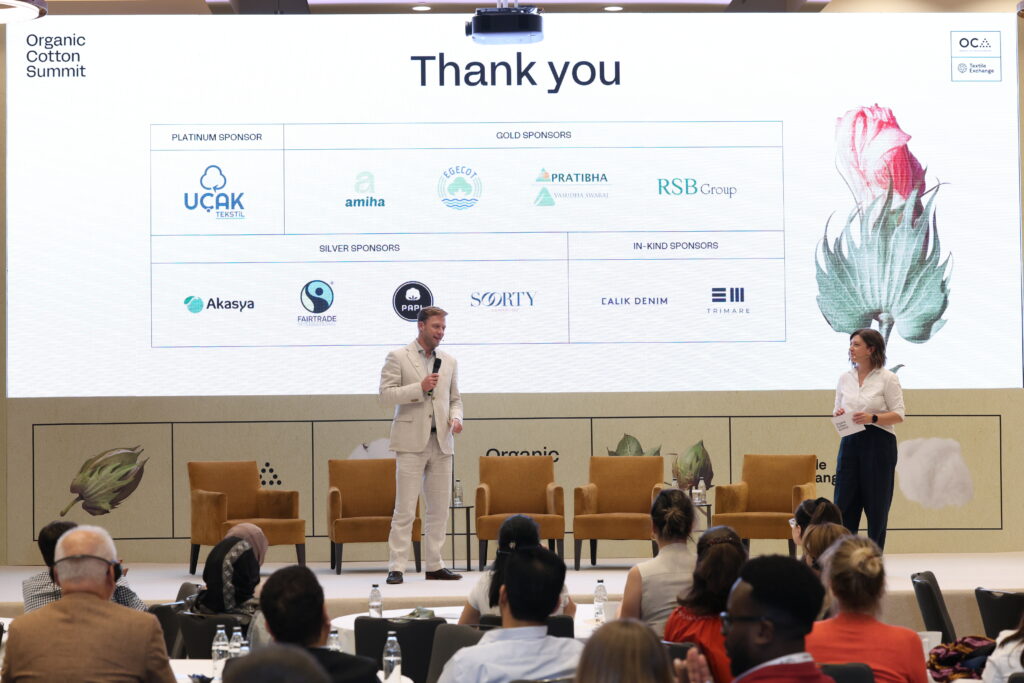
Co-hosted by the Organic Cotton Accelerator (OCA) and Textile Exchange, the summit convened farmers, producer organizations, suppliers, brands, retailers, civil society organizations, the public sector, innovators, and finance stakeholders from across the globe.
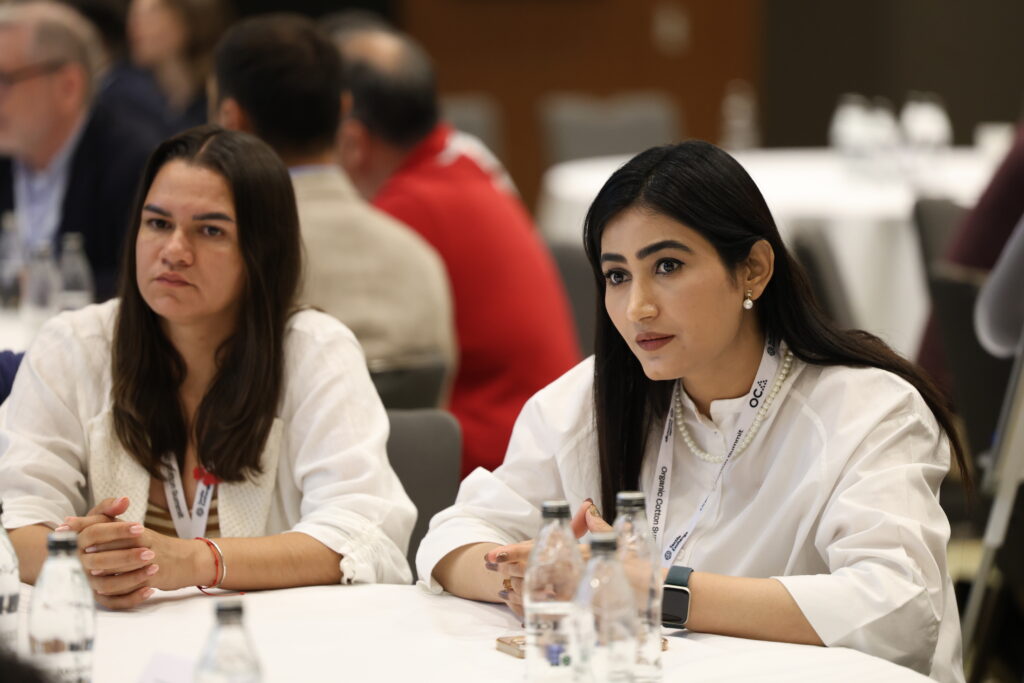
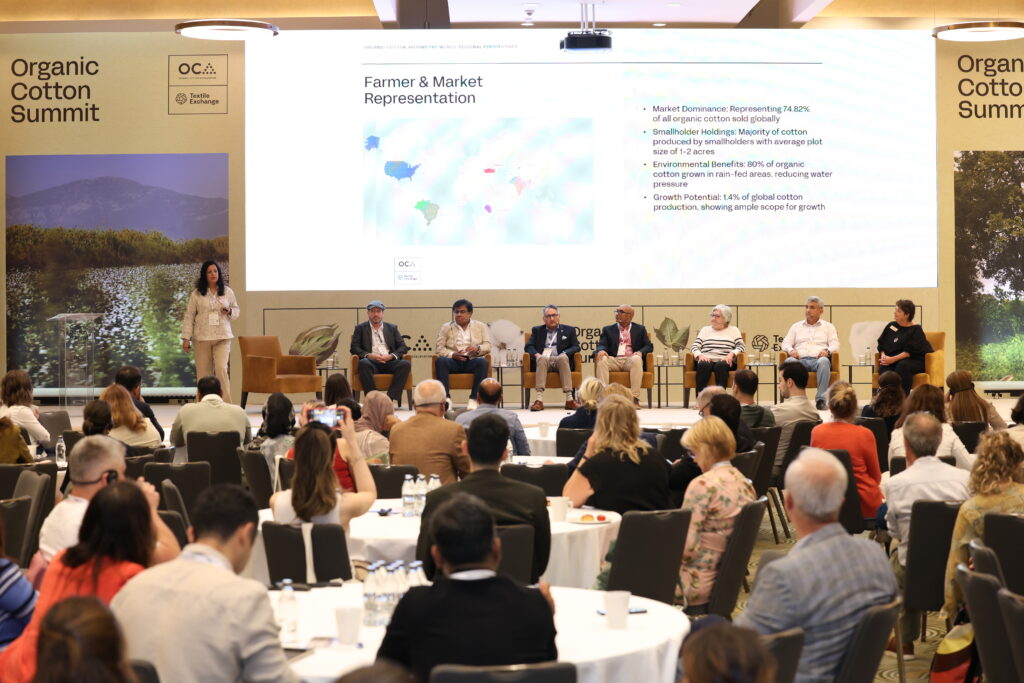
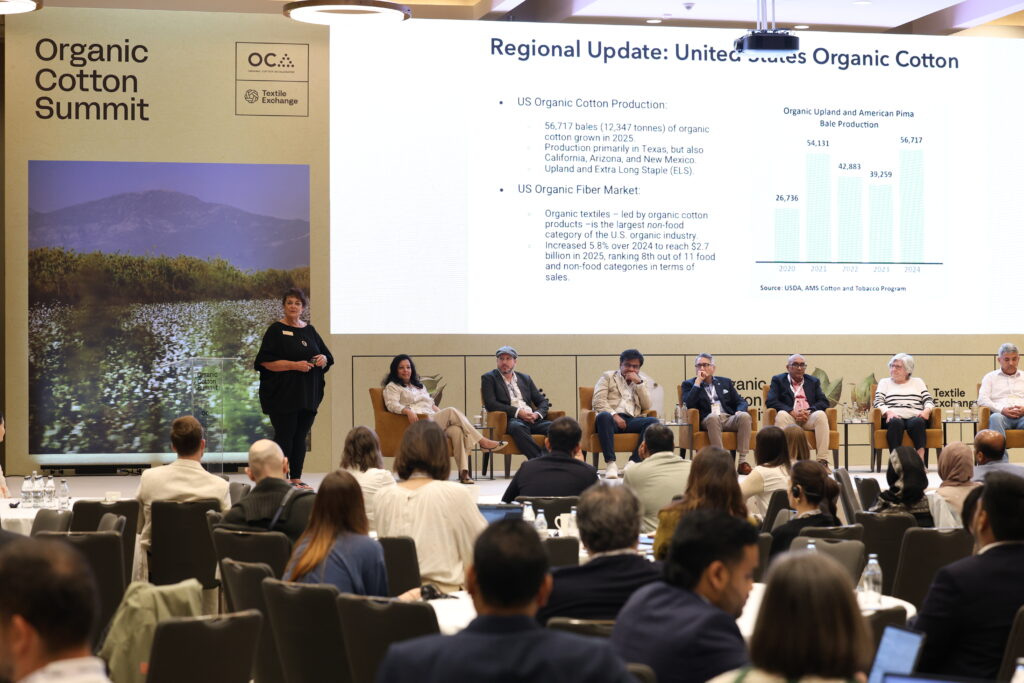
The Summit is particularly significant because of its balanced representation across the organic cotton value chain. Close to 270 participants from 24 countries attended, spanning key production and consumption regions and reflecting the diversity of stakeholders shaping the sector.
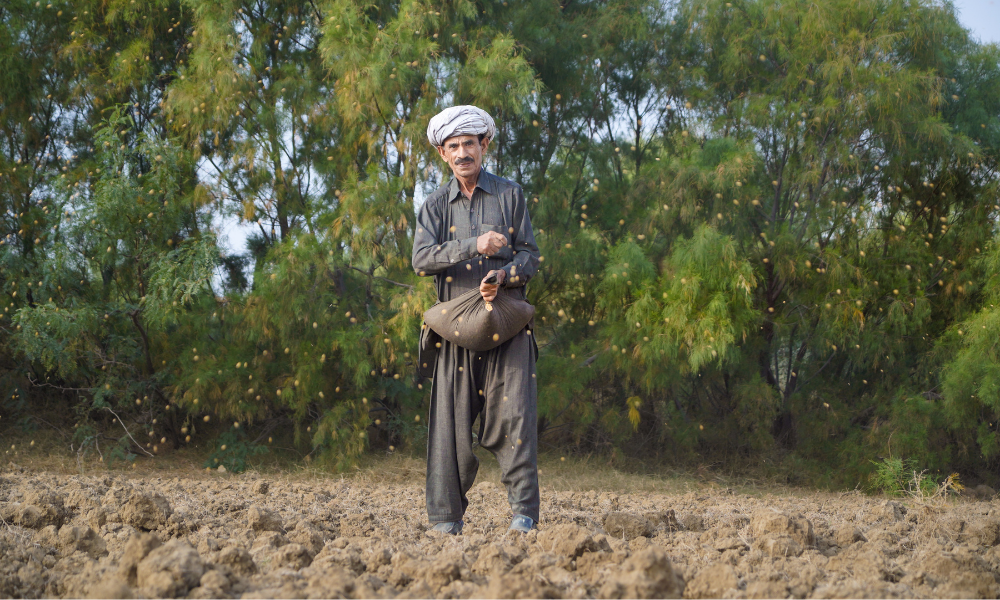
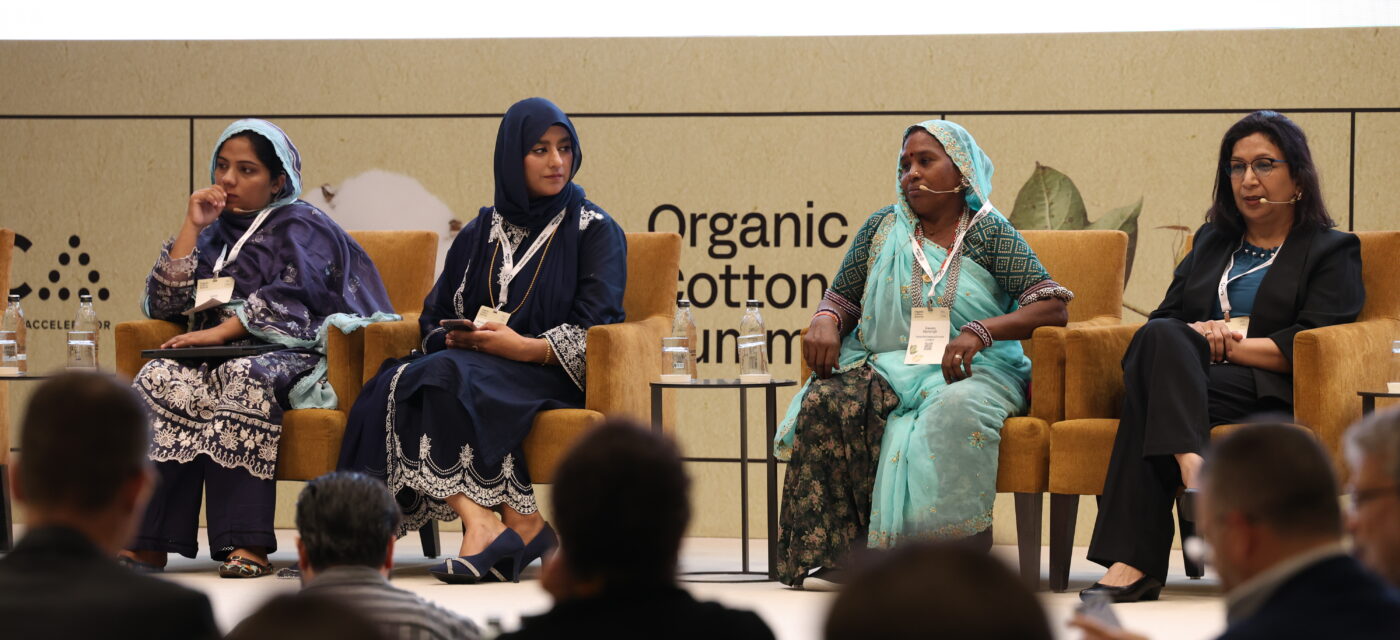
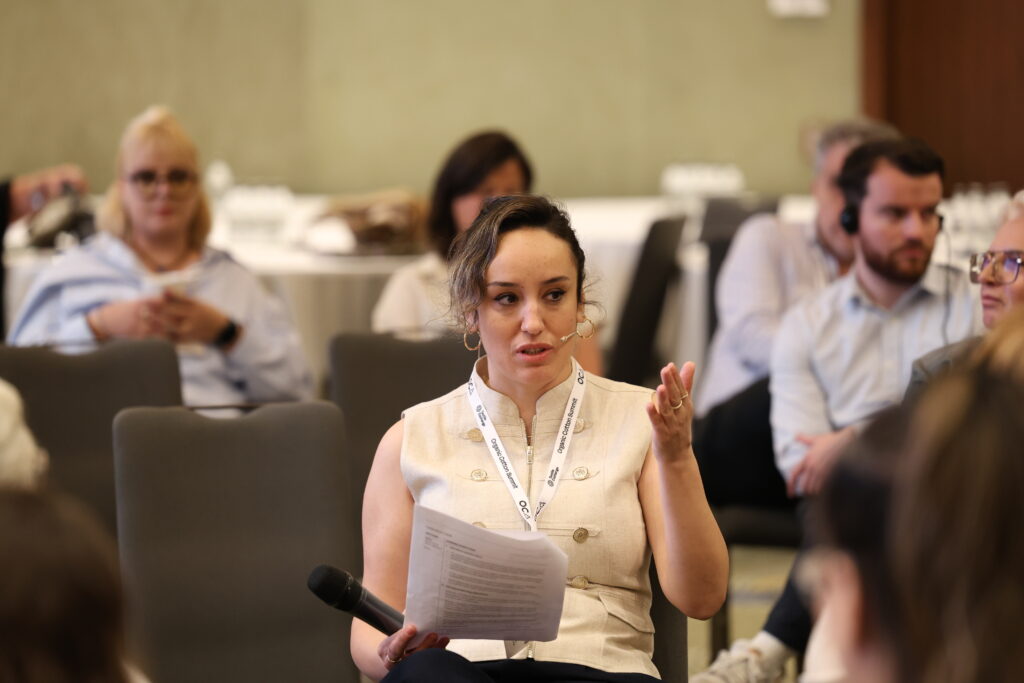
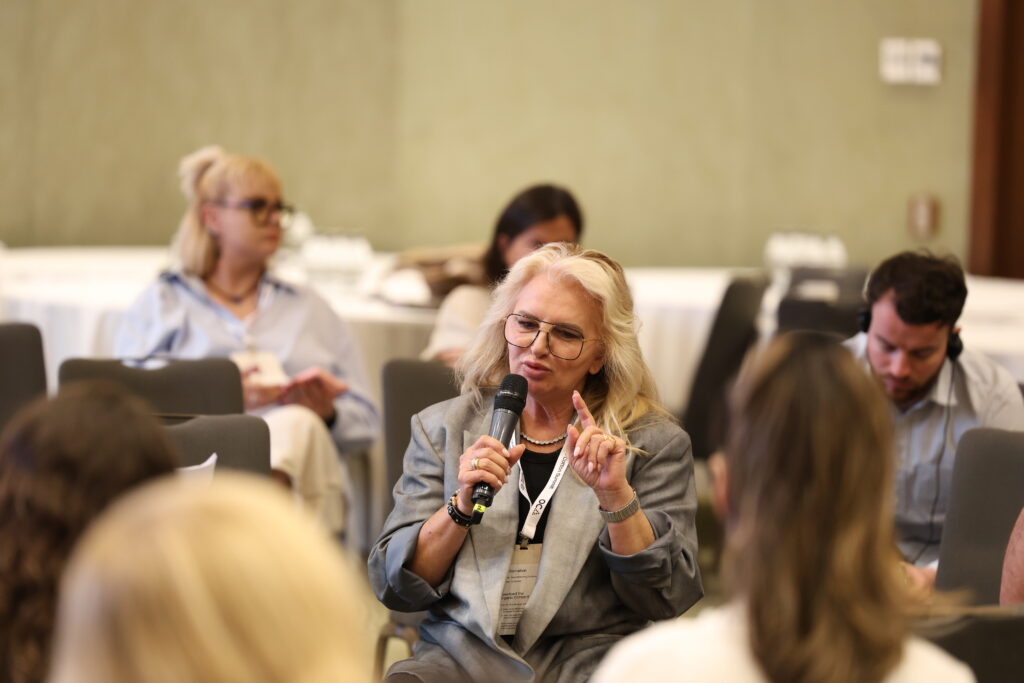
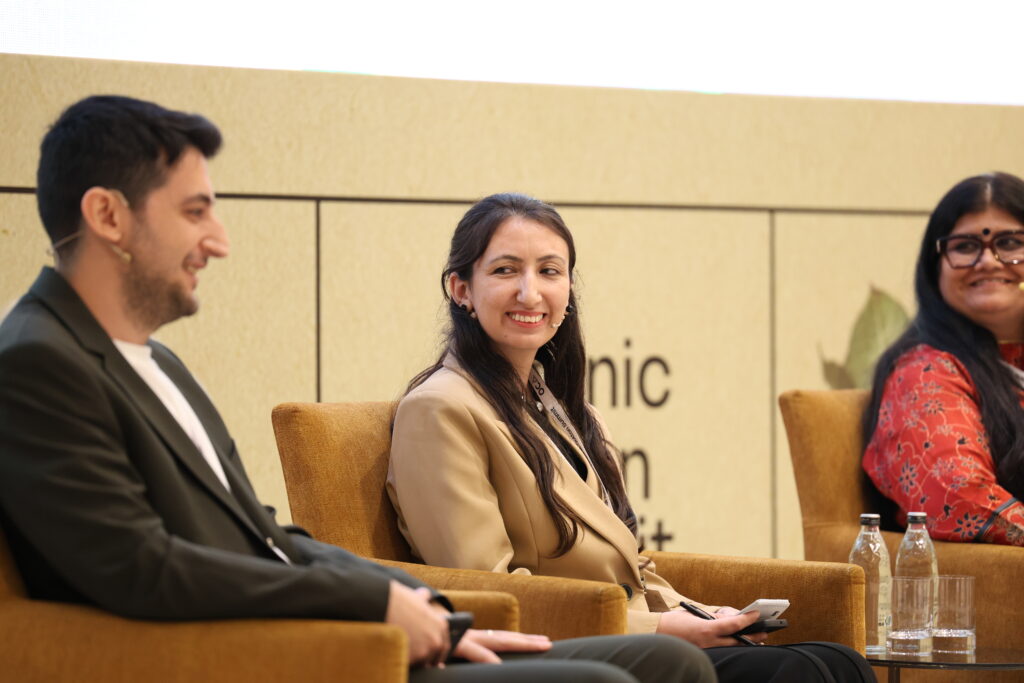
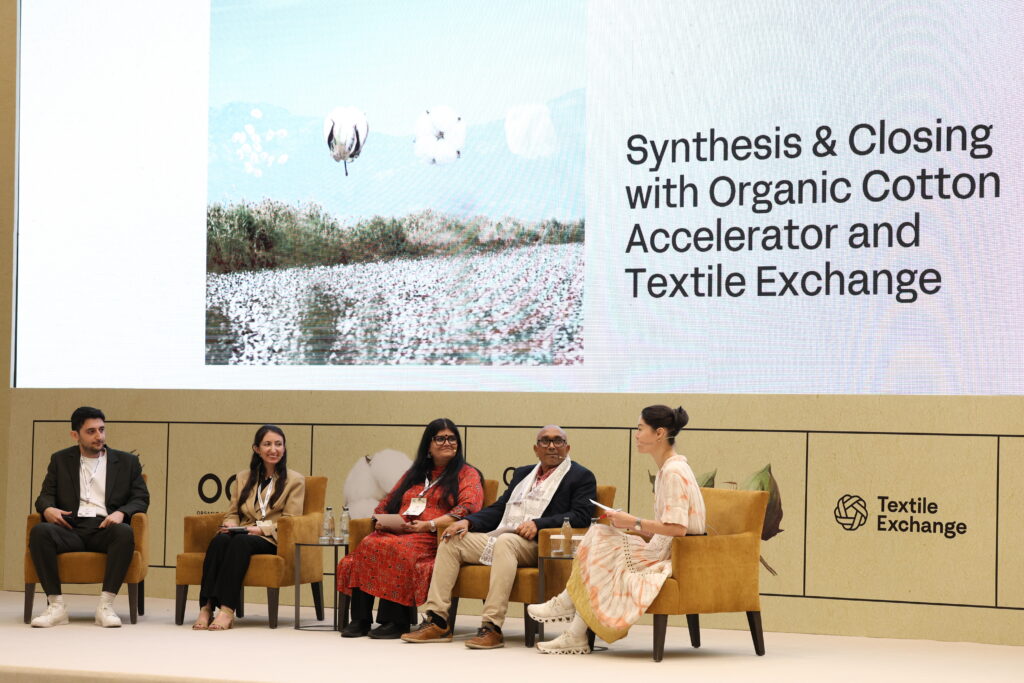
The event’s broad representation created a rare opportunity for direct dialogue between those growing cotton, processing materials, sourcing products and shaping policy. Discussions repeatedly highlighted the importance of ensuring that producing communities remain at the center of decision-making as the sector works to scale organic cotton. The program also featured speakers and experts from across the global organic and sustainability landscape, alongside the Organic Cotton Pavilion hosted by OCA, showcasing organizations working directly across organic cotton production, certification, traceability, and innovation.
″The organic cotton sector should work like a healthy farm ecosystem. Every part has a role to play, and every part depends on the others. When you look around this room, that ecosystem is here: farmers, brands, manufacturers, certifiers, public sector, civil society organizations, and partners from across the value chain. When trust, knowledge, demand, and long-term commitment reinforce one another, the whole system becomes stronger. But no ecosystem can thrive if too much risk sits with one group. If farmers carry a disproportionate share of the risk, the foundation becomes unstable. Our collective challenge is to build a system where responsibility, value, and risk are shared more fairly. Because organic cotton will only reach its potential if we strengthen the entire ecosystem, together.″
The event reflects a shared commitment from OCA and Textile Exchange to ensure that the future of organic cotton is shaped through collaboration across the entire ecosystem, with farmers and producers at the center of the conversation.
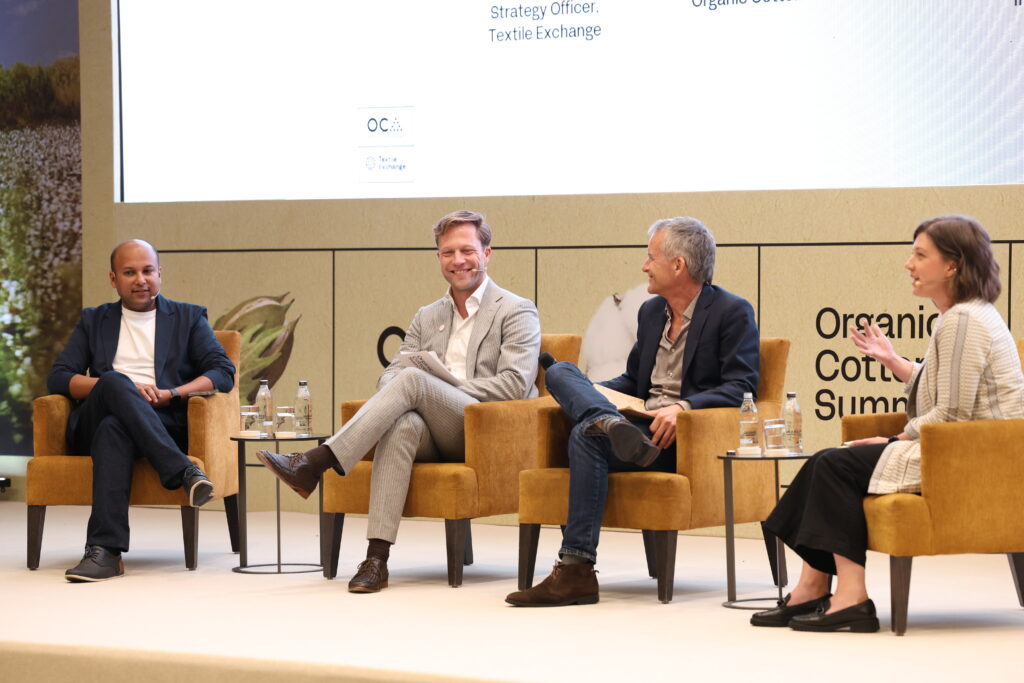
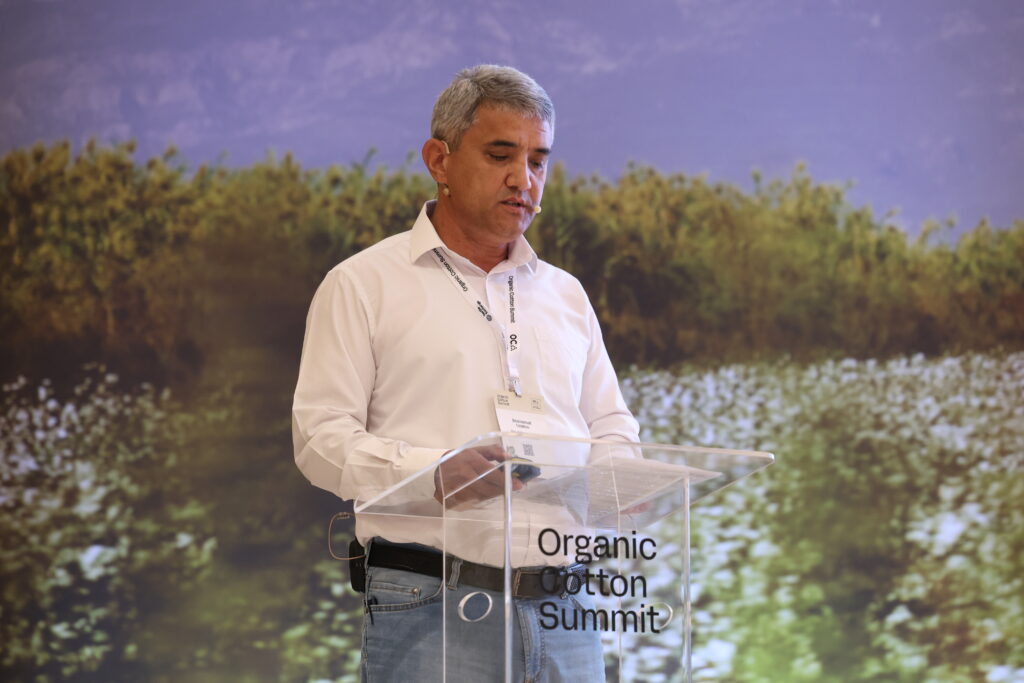
“Organic cotton has enormous potential, but potential does not scale on its own,” said Ashley Gill, Chief Standards and Strategy Officer, Textile Exchange. “It scales through trust, collaboration, long-term commitment, and shared responsibility across the value chain. That’s what the Organic Cotton Summit is about. Bringing together the people who can turn ambition into action and create the conditions for organic cotton to grow and thrive. The responsibility for that progress does not sit with any one organization or stakeholder. It belongs to all of us in this room.”
The Organic Cotton Summit has provided a much-needed platform for the sector to align around practical solutions, share knowledge, regional context and strengthen partnerships needed to scale organic cotton’s impact. Discussions focused on how the sector can scale organic cotton while responding to evolving market, policy, and regulatory expectations.
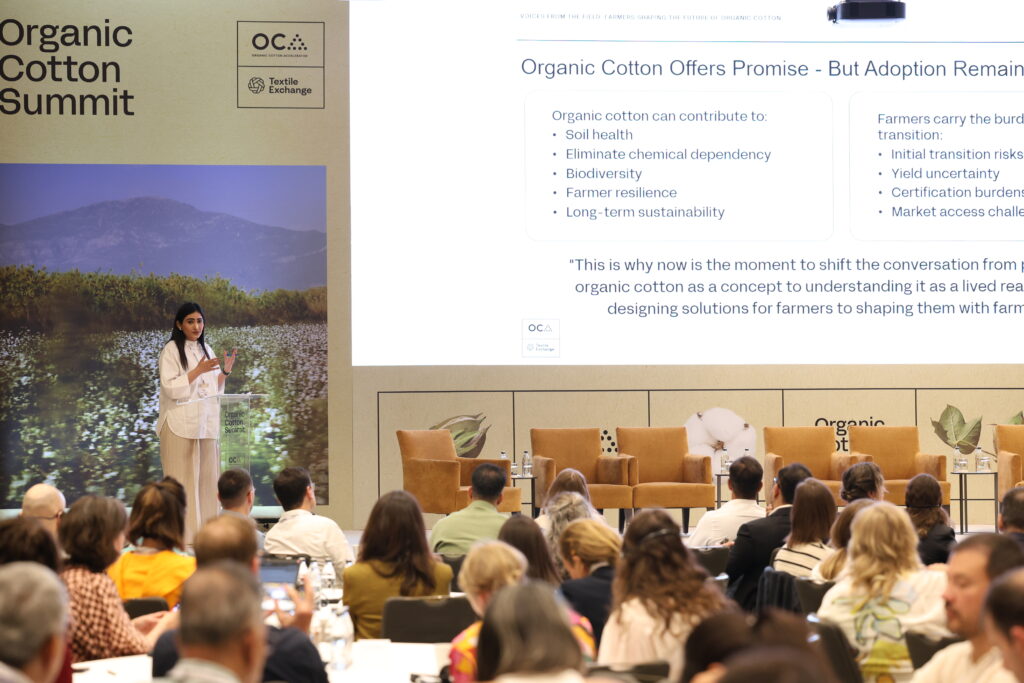
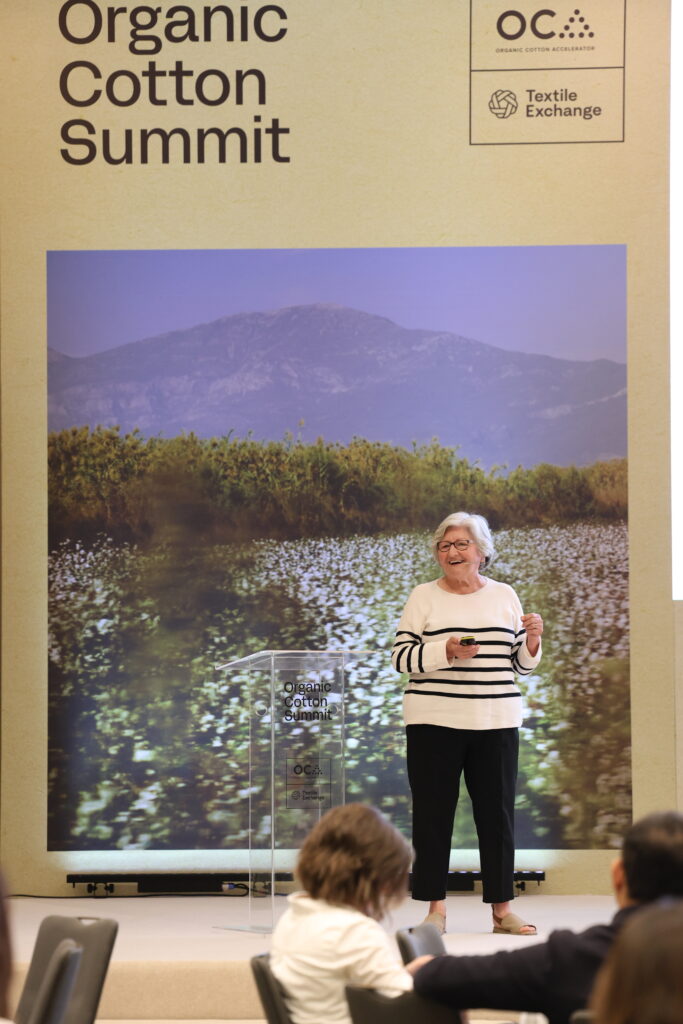
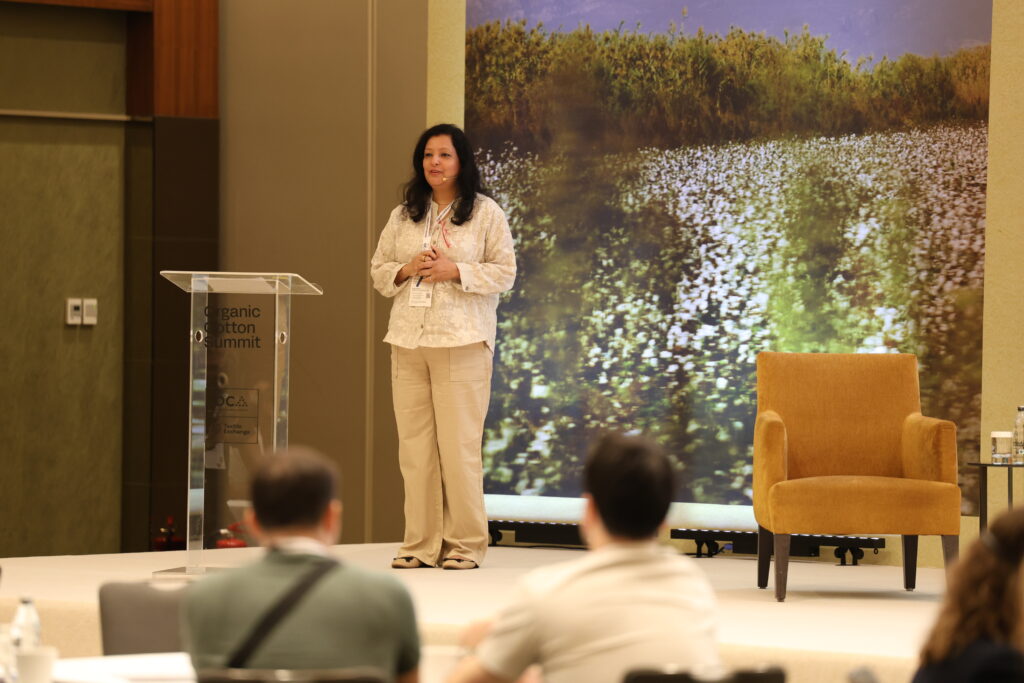
During her keynote, Dr. Başak Egesel, Director General of Plant Production, Head of Good Agricultural Practices and Organic Agriculture Department at the Ministry of Agriculture and Forestry of the Republic of Türkiye urged participants to work together. “We need to work together so that we can sustain things,” she said. Organic cotton shouldn’t be the thing of a single strain of yarn, because this is the fruit of a great deal of work and effort. Organic cotton is not just a single seed put into the ground; it has to do with the earth and reflects the labour of thousands of people.”
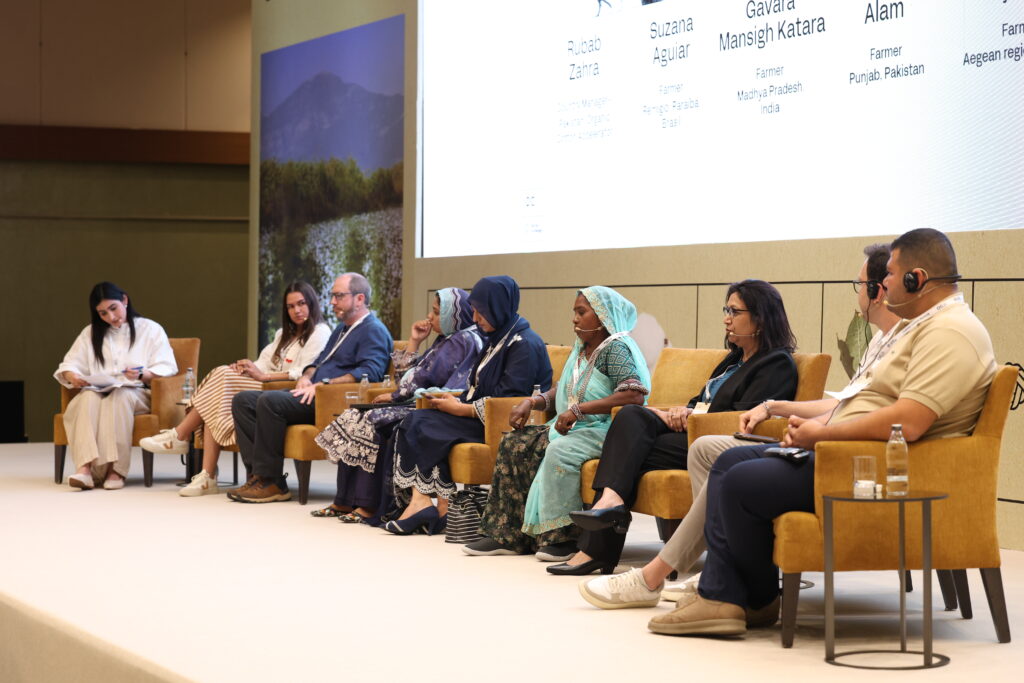
Suzanna Aguiar, an organic cotton farmer from Paraíba, Brazil spoke of the need to listen to farmer voices: “Being here today is something very concrete, and a recognition of a life transformed by organic cotton. Listening to farmers about their work like you are doing today is a good beginning to finding solutions.”
Organic cotton as a resilience strategy
A recurring theme across sessions was the growing recognition that organic cotton is an important strategy for managing long-term risks facing the industry. Participants highlighted the interconnected challenges of climate adaptation, soil health, biodiversity, farmer livelihoods and sourcing security, emphasizing that progress will depend on coordinated action across the value chain.
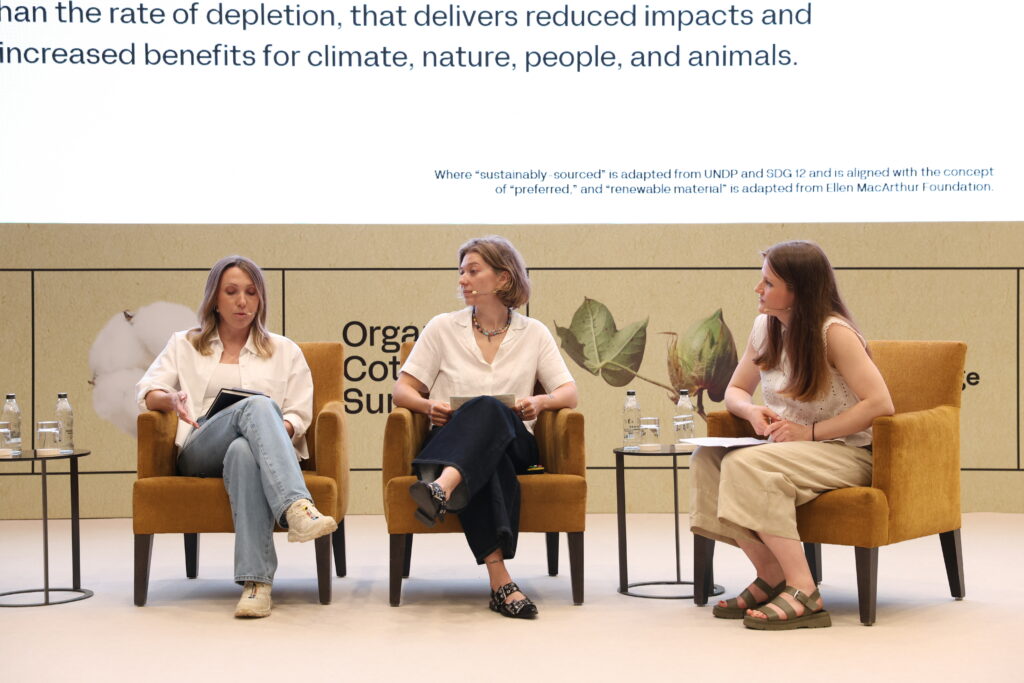
Throughout the summit, participants explored practical approaches to accelerating progress, including unlocking investment for farming communities, leveraging data to drive climate and nature outcomes, strengthening traceability and transparency systems, preparing for evolving policy and due diligence requirements, and building trust across increasingly complex global supply systems. Discussions examined how compliance can be used not only to meet regulatory expectations but also to support more resilient, accountable, and farmer-centered sourcing models.
The conversations in Istanbul reinforced a shared understanding that building a resilient organic cotton sector will require long-term commitment, practical collaboration, and investment that reaches farming communities. Participants leave the summit with a stronger network of partnerships and a clearer sense of the actions needed to scale impact across the value chain.
The summit experience extends beyond the conference venue through a field visit to the organic cotton-growing region of Aydın, Türkiye. Hosted by OCA’s local partner, Akasya, the visit offers participants the opportunity to engage directly with farmers, visit organic cotton fields during the growing season, and tour a local ginning facility. By connecting stakeholders with the realities of production on the ground, the field visit helps strengthen understanding of how sourcing decisions, farming practices, and value chain collaboration contribute to long-term resilience across the sector.