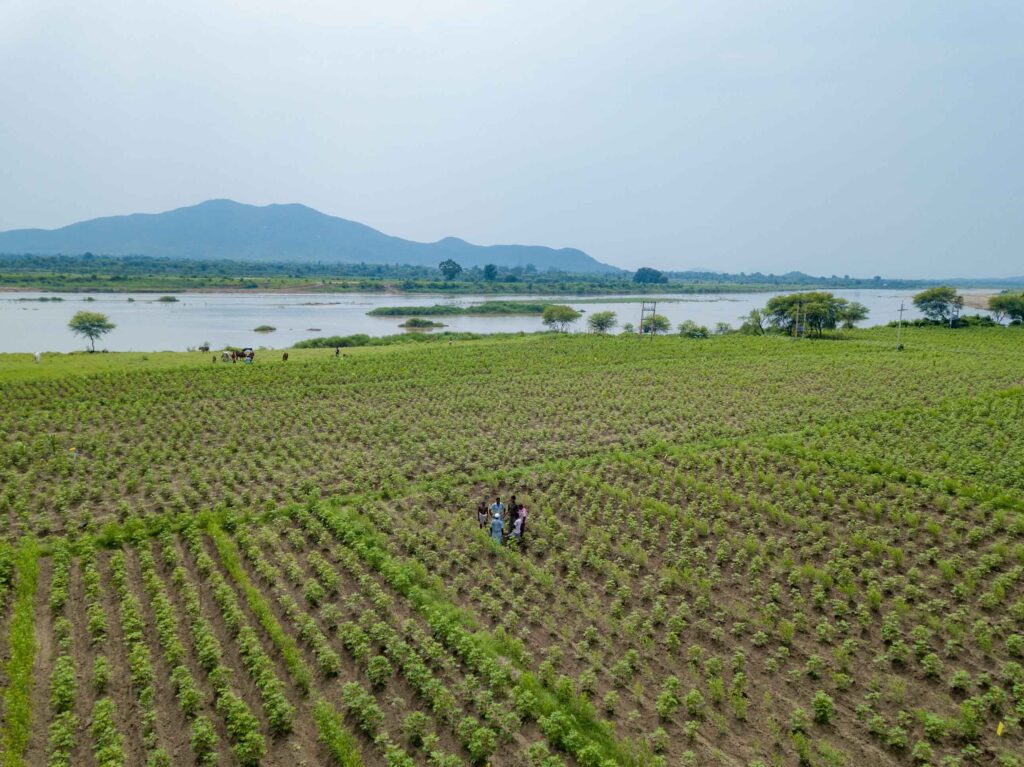
We arrived in Balangir to the sound of conversation, laughter, and the steady rhythm of farm life. People swapping stories between sips of tea, sleeves rolled up, ready to learn. Among them was Sastri Bhoi, a cotton farm leader whose curiosity and willingness to try organic and regenerative methods turned a two-day workshop into a promise for stronger soils, fewer chemical inputs, and practical examples others can follow.
Impact isn’t a tally of training. It’s local leaders leaving ready to influence practices across their communities. Sastri can now go into her community and disseminate the knowledge she acquired, multiplying OCA’s reach and helping build more resilient farming communities.
A collaborative approach
Hosted by OCA’s Implementing Partners Ploughman Agro, Pratima Agro, Amiha Agro, and Chetna, OCA piloted this regional lead farmer training workshop in Balangir district to address frontline capacity gaps by training farmers directly. The workshop brought together 40 lead farmers representing 33 Internal Control Systems across Odisha and seven master trainers from the four participating Implementing Partners. Facilitators included Ajit Kelkar from Abhinav AHRDO and Lucina Yeasmin, OCA’s Agronomy Officer.
A new model
This workshop represents a shift from OCA’s previous cascading model, which relied on training master trainers and field staff who then reached farmers. With roughly one field staff for every 500 farmers, timely and effective technology transfer has been constrained. Lead farmers are identified as early adopters and community resource persons who set up demonstration plots, run seed trials, and actively promote organic cultivation in their villages and communities. This new model directly empowers lead farmers as front-line disseminators. By strengthening their technical knowledge and facilitation skills, OCA aims to accelerate peer-to-peer dissemination and scale organic and regenerative practices more rapidly.
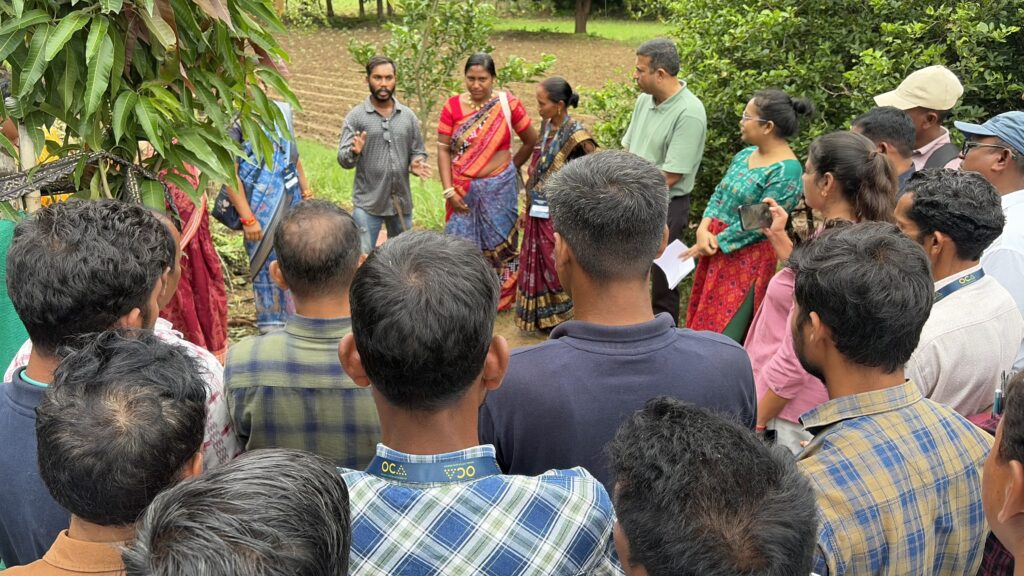
Day 1 was an in-house, concept-seeding session where participants explored the principles of organic and regenerative farming. Sessions focused on soil and plant nutrition management, crop diversification, and pest management, helping deepen participants’ understanding of system-level approaches rather than piecemeal fixes. Conversations were lively; farmers compared notes on soils, seeds and cropping calendars, and raised practical concerns about translating ideas to their own fields.
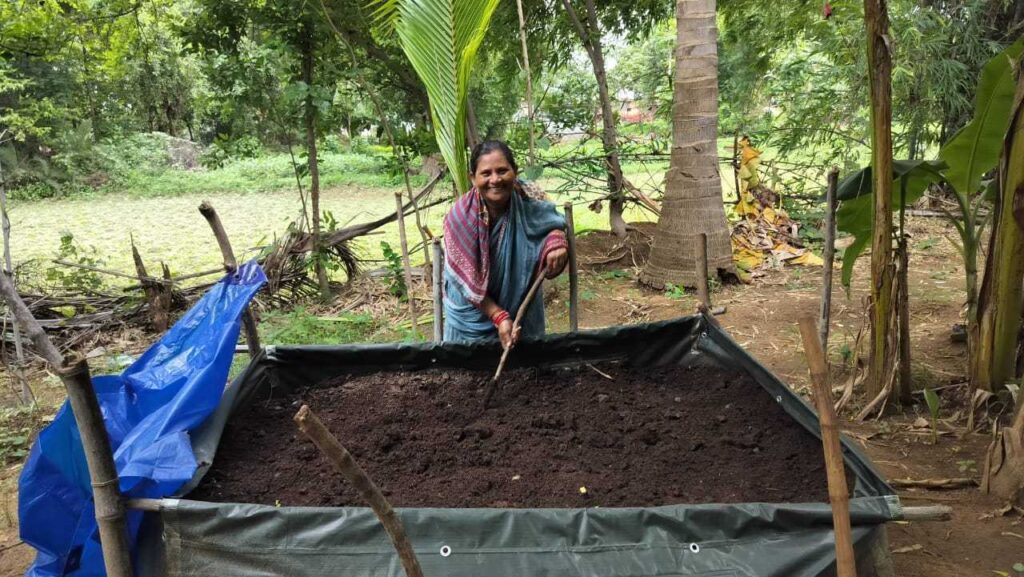
Day 2 shifted the learning to the field with hands-on demonstrations and an exposure visit. This format encouraged practical skill-building: preparing microbial cultures, compost teas, and plant-based pest controls; troubleshooting recipes and application methods; and observing the subtle responses of soil and crop under regenerative practices. Women farmers stood out for their active co-facilitation of demonstrations, showing both technical confidence and leadership in group work.
From pilot learnings to impact
For OCA Contributors and partners, this workshop is both an example and a lens into how we’re helping build more resilient farming communities: investing in local leaders, testing a direct-training model, and learning what works on the ground. As a pilot, results will be evaluated, but immediate outcomes are encouraging.
Sastri and her fellow participants left with strengthened knowledge and practical skills, motivated to implement organic and regenerative practices on their own farms and to demonstrate them in their communities. More importantly, the event re-centered learning around people like her; curious, hands-on, and ready to lead. This is precisely how resilient farming communities and lasting change are built.