Monitoring and Data
Impact you can see. Change you can measure. Claims you can trust.

Measuring what matters

It’s easy to make claims about sustainability. It’s much harder to back them up with primary, verified data collected at field level, season after season. That’s the work OCA has built its monitoring and evaluation system around.

Everything OCA does is aimed at achieving the greatest possible impact in line with our mission: unlocking the full potential of organic cotton for farmers, supply chains, and the planet. Our monitoring and evaluation (M&E) system is how we know whether we’re getting there, and how we adapt when we’re not.

For brands,suppliers and donors , it’s also how we demonstrate that the investment they make in OCA’s Farm Programme reaches farmers and delivers real, measurable results. In a sector where greenwashing is a genuine risk, verified data isn’t a nice-to-have. It’s the foundation of credibility.

How our M&E system works

OCA’s M&E system goes beyond counting farmers and hectares. While scale matters, understanding the quality of change at farm level is what drives continuous improvement.

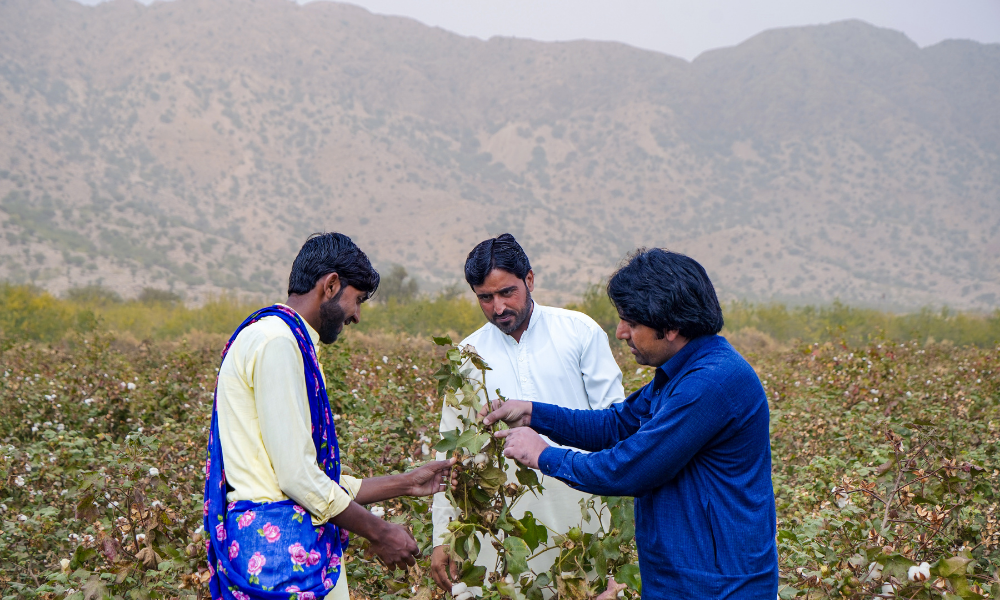
We work with independent, third-party agencies who collect, verify, and validate data directly in the field. These agencies must demonstrate the qualifications and competencies required for the role, ensuring impartiality and rigour. The data they collect covers a wide range of indicators, including:

  • Seed variety, input provision, and selection
  • Agronomic results and yields
  • Farmer general data and household information
  • Implementation partner support provided
  • Operating costs and revenue
  • Business case and payment verification
  • Adherence to standards and organic integrity
  • Quality and lint volume output

This field-level data feeds into OCA’s annual Farm Programme Impact Report, and also informs ongoing improvements across seed variety development, integrity systems, training content, and volume reconciliation across the supply chain.

What our M&E system is designed to do

OCA’s M&E system serves four connected purposes, each reinforcing the others.

Performance measurement

We assess the direct results of the practices in OCA’s interventions and the extent to which they lead to real improvements in the business case for smallholder farmers. This includes evaluating both existing and newly piloted activities, so we can continuously improve and build comparative learnings over time.

Enhanced transparency

Verifiable and transparent data collection is what makes OCA’s farm projects credible. By mandating qualified, independent third-party verifiers, we ensure that the results we report are not self-assessed. That independence matters, for brands that need to back their sourcing claims, and for farmers who deserve an honest picture of what’s working.

Communicating results

Data is only useful if it reaches the people who need it. We share results with sector stakeholders, contributors, and the wider public to show where progress is being made and where more work is needed. Transparency about outcomes, including the challenges, is part of how OCA builds trust across the supply chain.

Continuous improvement

Our M&E system contributes to a cycle of shared measurement and learning. Each season’s data informs the next season’s interventions. That feedback loop, working with implementation partners, brands, and farmers, is how the programme gets better year on year.

Data at the heart of our 2030 Strategy

OCA’s 2030 Strategy identifies data as one of three strategic enablers, alongside organisational strength and financial resilience. That’s a deliberate choice. Without reliable data, it’s impossible to know whether organic cotton is delivering on its promise, or where to focus the next round of investment.

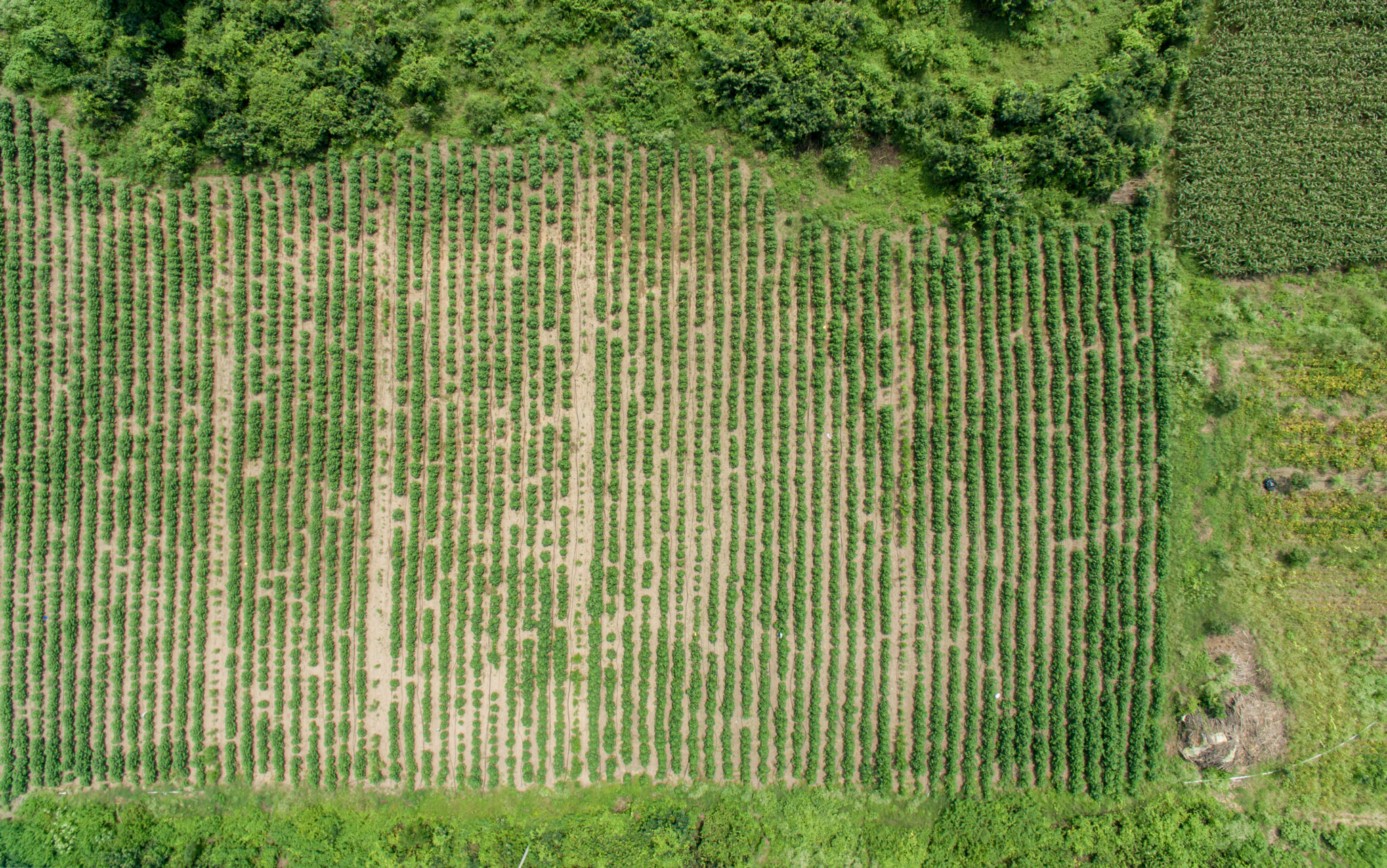
We are building an integrated digital system that tracks environmental and social metrics, supports traceability, and gives all actors the visibility they need to make informed decisions. This includes investment in tools like remote sensing, geotagging, and digital payments, designed to collect reliable data more efficiently while easing the burden on farmers and field staff.

The goal is clearer insights, more regular feedback to partners, and stronger links to traceability systems across the supply chain. Better data means better decisions, for OCA, for brands, and for the farmers at the centre of everything we do.


What we measure across the Farm Programme

OCA’s validated data provides input for impact reporting across the following categories. Each one tells part of the story of what’s actually happening at farm level.

  • Farmer prosperity: net income per hectare compared to conventional peers, premium payments received, operating costs
  • Environmental impact: soil health indicators, water use, greenhouse gas emissions, biodiversity measures
  • Supply chain integrity: adherence to organic standards, GMO testing results, chain of custody verification
  • Programme quality: training delivered, inputs provided, implementation partner performance
  • Farmer wellbeing: working conditions, gender equity indicators, access to grievance mechanisms

This data does not sit in a report and gather dust. It feeds directly into OCA’s multi-stakeholder platform, informing decisions on seed variety development, best practice sharing, training content, and volume reconciliation across the supply chain.

What this means for brands and partners

When a brand sources organic cotton through OCA’s Farm Programme, they are not relying on self-reported data or unverified claims. They have access to exclusive, independently verified field-level reports that cover the full scope of the programme, from what inputs farmers used to what they were paid.

That matters increasingly. Regulators, investors, and consumers are all asking for more credible sustainability data. OCA’s M&E system is built to provide exactly that: evidence that is specific, verifiable, and tied to real outcomes at farm level.

We review and update our processes, materials, and service agreements regularly, so the system keeps pace with evolving standards and expectations.

FAQ Section