Annual Report 2025
Our 2025 Annual Report looks back at what we achieved together, and ahead to where we go next.
Looking back at the impact we achieved in 2025
2025 marked ten years of the Organic Cotton Accelerator. What began in 2016 as a clear idea, that organic cotton only works if it works for farmers, has grown into a global organisation connecting farmers, brands, and supply chain partners around a more credible, resilient organic cotton sector.
The numbers speak with quiet force: more than 100,000 farmers in the programme, over €10 million in direct field investment, and 141,000 hectares under organic management. We also launched our updated 2030 Strategy and published the first regional Life Cycle Assessment study on organic cotton in India, strengthening the evidence base for organic cotton in markets and policy discussions alike.
10 Years of Organic Cotton Accelerator

Ten years ago, OCA began with a clear idea: organic cotton could only reach its potential if the people growing it, sourcing it, and bringing it to market worked together differently.
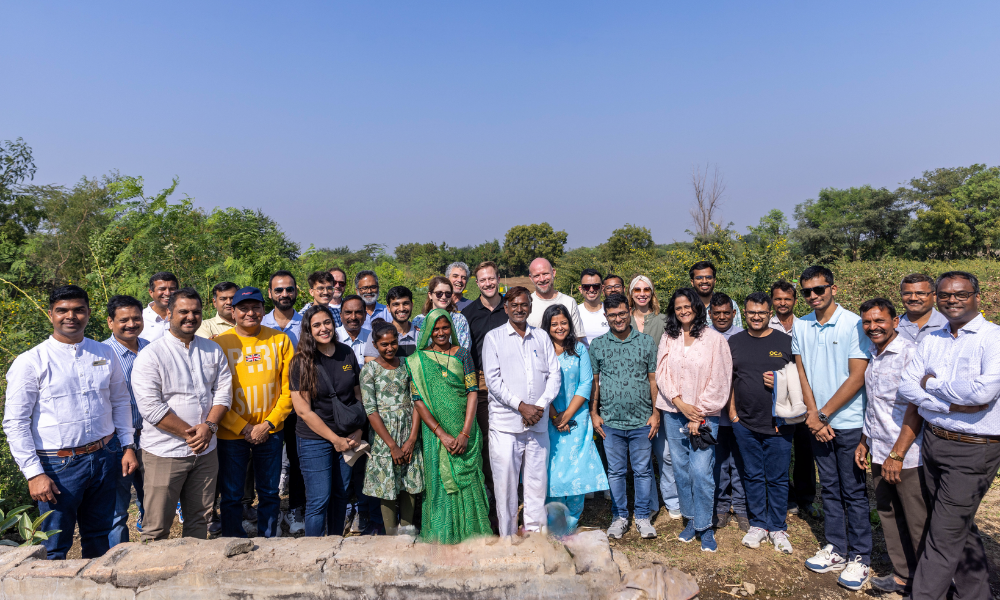
This anniversary is a moment to recognise how far the work has come, and to acknowledge the community that made it possible: the farmers who have committed to organic practices year after year; the brands and suppliers who have chosen to back that commitment with sourcing decisions and long-term investment; and the partners and donors who believed, early and often, that a different model was possible.
A decade of impact
This timeline highlights some major milestones in OCA’s journey, complemented by testimonials from a selection of the diverse stakeholders that make up its ecosystem.
-
2016
- OCA was founded by Laudes Foundation, H&M Group, Kering, Eileen Fisher, Textile Exchange, Tchibo, Inditex and C&A.
-
2017
- The first Farm Programme pilot launched in India, connecting 1,800 farmers with four brands around secure pricing.
-
2018
- OCA launched Seeding the Green Future, India’s largest non-GM cottonseed breeding programme.
-
2019
- OCA broadened participation, reaching 11,000 farmers and strengthening its role in shaping change across the sector.
-
2020
- More than 22,000 OCA farmers received over €1.7M in premiums, helping reinforce the business case for organic cotton.
- Seed systems and data transparency advanced, strengthening farm-level impact measurement.
-
2021
- OCA launched its In-conversion Programme, bringing over 21,000 farmers into the transition to organic.
- Non-GM cottonseed guidelines were introduced, alongside regenerative farming trials.
-
2022
- OCA’s reach grew to 74,000 farmers, with operations expanding into Pakistan and €4M paid in premiums.
- The Organic Training Curriculum for India was published, helping standardise farmer training.
-
2023
- Growth continued, with more than 87,000 metric tonnes of organic cotton procured and €4.2M distributed in premiums.
- OCA launched its first pilot Programme in Türkiye.
- New work began on biodiversity monitoring, public affairs, and decent work training.
-
2024
- OCA supported over 100,000 farmers across India, Pakistan, and Türkiye; its largest reach to date.
- The Decent Work Strategy was launched to improve conditions for cotton farmers and workers.
- OCA community grows to 60+ Contributors.
-
2025
- OCA published the first regional Life Cycle Assessment for organic cotton in India.
- OCA launched the Organic Cotton Curriculum in Türkiye, including its first regenerative agriculture modules.
Our 2025 at a glance
100,000+
farmers in the Farm Programme across India, Pakistan, and Türkiye
141,000+
hectares of farmland under organic management
132,000+
metric tonnes of seed cotton produced
€10M+
in field investments leveraged by OCA
13%
premium paid to OCA farmers on top of market price
53%
of premium payments made digitally
70%
uptake of organic cotton by OCA brands
60
Contributors made up our community
Driving impact through five strategic priorities
In 2025, we rolled out our updated 2030 Strategy. At its core is a simple insight: real change happens when farmers, brands, and partners work together. Five strategic priorities shape our approach and drive impact, making sure our community has the tools and support needed to accelerate the transition to organic cotton.
01 Resilient farming communities
Farmers are at the centre of everything we do. In 2025, brands in our Farm Programme paid a 13% premium on organic cotton, adding nearly €6.8 million directly to farmer incomes. More than 85% of farmers in the programme received training, supported by over 400 demonstration plots across India and a new Organic Cotton Training Curriculum for Türkiye, downloaded more than 700 times since launch.
Digital payments rose to 53% of all transactions, up from 46% the year before, giving farmers greater control over how and when they receive their money. Alongside this, 65 field staff took part in decent work training-of-trainers sessions, carrying our Decent Work Strategy into the field.
02 Scaling OCA’s Farm Programme
Scaling begins with demand. When brands commit to sourcing organic cotton through OCA’s Farm Programme, they create the reliable demand that makes organic farming viable. In 2025, farmers in the programme produced 132,000+ metric tonnes of seed cotton across more than 141,000 hectares.
The OCA Farm Fund completed its second pilot year, reaching over 85% procurement uptake, and we began developing partnerships to extend our work into East Africa, with a pilot planned in Tanzania in 2026.
03 Data to drive change
Reliable data is essential to the future of organic cotton. In 2025, we completed a regional Life Cycle Assessment study of organic cotton in India, based on data from more than 18,000 farmers across five states and three growing seasons. The results confirm that organic cotton consistently has a lower environmental footprint across key indicators, including climate change, water use, acidification, and eutrophication.
Through the Unlock Programme, we worked with around 2,000 farmers in Madhya Pradesh and Gujarat to build a detailed field-level baseline. We also began setting up a Grievance Redressal Mechanism, mapped how payments flow to farmers, and reviewed our policies through a Gender Equality and Social Inclusion lens.
04 Growing an engaged community
Organic cotton depends on collective action. Our community grew to 60 Contributors in 2025: 16 global brands and retailers, 28 suppliers and manufacturers, 14 civil society and farm organisations, and two philanthropic partners.
We convened the sector across borders and formats: a regional stakeholder event in Pakistan bringing together over 130 local and global stakeholders, the Regenerative Fund for Nature Learning Exchange hosted in India with 37 professionals from 23 organisations across 16 countries, and 10 online sessions connecting Contributors on the topics that matter most.
05 Positioning and influence
Organic cotton has a key role to play in a more sustainable textile industry. In 2025, OCA raised the voice of organic cotton and farmers at key global forums, including the Textile Exchange Conference, the Better Cotton Conference, EU Green Week, Bharat Tex, and World Cotton Day activations in India, Pakistan, and Türkiye.
We provided input across four key European policy initiatives, contributed to the Cotton and Biodiversity paper with Solidaridad, and worked in coalition with partners such as the Policy Hub, Textile Exchange, IFOAM Organics Europe, and GOTS to position organic cotton as part of an industry-wide shift towards a more sustainable, resilient textile system.
About OCA
OCA’s team is based across the Netherlands, India, Pakistan, and Türkiye, positioned where organic cotton is grown and where the work needs to happen. Our values show up in how we handle a difficult conversation, how we respond when something goes wrong, and how we make space for the people around them to contribute: inclusive, honest, enterprising, and with grit.
On governance, OCA’s Board brings together brands, suppliers, civil society, and farm group representatives, ensuring decisions are tested against the whole value chain. At the end of 2025, Anita Chester and Ashis Mondal stepped down, and Naveen Patidar joined on 1 January 2026, bringing experience from the Aga Khan Rural Support Programme in India. Board members serve without remuneration.
As of 1 January 2026, OCA was granted Public Benefit Organisation (ANBI) status in the Netherlands, a formal recognition of OCA’s mission and its contribution to the public good, and a stronger basis for long-term funding and partnerships.
Thank you to our global community
Ten years on, OCA exists because collective action, sustained over time and grounded in evidence, can change the conditions of an entire sector. We thank the farmers who commit to organic practices year after year, the brands and suppliers who back that commitment with sourcing decisions and long-term investment, and the partners and donors who believed, early and often, that a different model was possible. Here’s to the next decade, and to everyone who will make it happen.