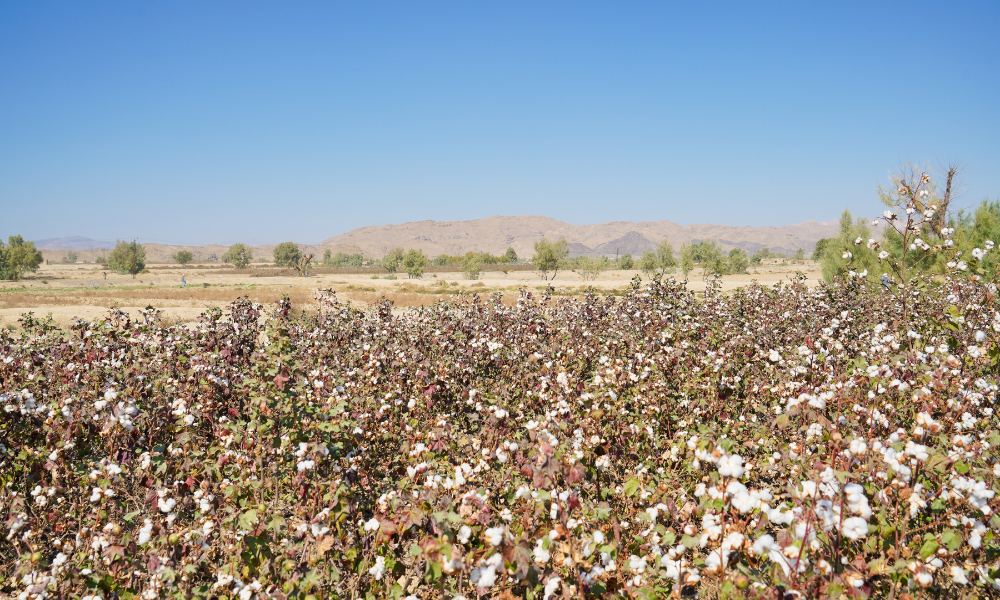
OCA and WWF-Pakistan have joined forces to advance regenerative and organic agricultural production and markets in Punjab and Balochistan, Pakistan. Through the Regenerative Production Landscape Collaborative (RPLC), OCA is deepening its engagement in Pakistan, connecting more farming communities to its Farm Programme. In parallel, the RPLC’s landscape-level activities will work to create long-term impact on farmer incomes, inclusion, and environmental regeneration across these regions.
″This partnership reflects the growing recognition that lasting change requires collaboration across supply chains, agriculture landscapes, and local communities, as well as the appetite to invest in regenerative agriculture. The collaboration between OCA, WWF-Pakistan and RPLC demonstrates the power of aligning market-based solutions, responsible sourcing models, and multi-stakeholder led landscape transformation to support farmers, restore natural resources, and strengthen long-term resilience, and paves the way for financial support that can help this work scale.″
This engagement brings together complementary expertise to strengthen landscape-level interventions, connecting farming communities to sustainable production systems while fostering long-term improvements in livelihoods, inclusion, and environmental outcomes. It will enhance inclusive and gender-responsive livelihoods, improve access to finance and markets for sustainable produce, and strengthen multi-stakeholder governance across the landscape. OCA and WWF-Pakistan also aim to improve data systems, monitoring, and impact reporting to support evidence-based decision-making and long-term impact.
The Laudes Foundation-funded RPLC Pakistan initiative is an innovative landscape-level model that aims to foster agricultural ecosystems which conserve natural resources, enhance biodiversity, and build community resilience, while enabling responsible sourcing practices. The initiative brings together public, private, and civil society stakeholders to drive systemic change in key agricultural landscapes.
Through its Farm Programme, OCA works with partners to support farmers transitioning to organic and regenerative cotton production by strengthening capacity, improving market access, and ensuring demand for sustainably produced cotton. In Pakistan, this engagement is expected to further connect farming communities with responsible supply chains while enhancing production systems.

Collaborative approach benefitting farmers
OCA and RPLC complement each other, and by aligning efforts, both organisations aim to scale their positive outcomes. The landscape approach creates a deeper, more holistic impact for farmers and the environment – benefiting OCA’s farming communities, as well as the brands and retailers sourcing from them.
″WWF-Pakistan has played a pioneering role in Pakistan’s cotton sector for over two decades — from contributing to the establishment of the Better Cotton Initiative to connecting Pakistan with global organic cotton markets through its organic cotton initiatives. Building on this legacy, the partnership between WWF-Pakistan and Organic Cotton Accelerator under the Regenerative Production Landscape Collaborative–Pakistan (RPLC-Pakistan), funded by the Laudes Foundation, marks an important step towards scaling regenerative and sustainable cotton production in Pakistan. Through collective action, this collaboration will help strengthen rural livelihoods, promote responsible sourcing, and position Pakistan as a credible source of sustainable cotton in global markets. Together, we are demonstrating that long-term partnerships and collective action are essential for transforming agricultural landscapes at scale.″
RPLC Pakistan focuses on landscape-level transformation through regional platforms (‘Compacts’) in Punjab and Balochistan. These platforms aim to support the transition to regenerative agriculture through field-level interventions, value chain development, and multi-stakeholder governance, with a strong emphasis on local ownership and long-term sustainability.
The collaboration takes a holistic approach, addressing environmental challenges such as soil degradation, water stress, and biodiversity loss, while also improving smallholder incomes, strengthening resilience, and promoting inclusive participation, particularly for women and marginalised communities.
The landscape approach brings value to OCA’s farmers by establishing a locally owned, long-term programme aimed at addressing the root causes of sustainability challenges. RPLC convenes a broad range of stakeholders – including government departments, private sector actors, civil society organisations, academics, funders, and investors – to create the right enabling environment for a transition to regenerative farming. The RPLC guides farmers toward organic production, but recognises that this transition requires gradual, systemic change that goes well beyond the farmgate.
″This Collaboration of OCA with RPLC-Pakistan reflects a shared commitment to advancing scalable, farmer-centric solutions that strengthen environmental sustainability and rural livelihoods in Pakistan. Through aligned efforts and a shared vision, we aim to accelerate the transition towards regenerative and organic cotton production, creating long-term benefits for farming communities through improved livelihoods, enhanced resilience, and better environmental outcomes.″
By aligning efforts, the initiative aims to create enabling conditions for sustainable agriculture, including access to finance, improved data and monitoring systems, and stronger market linkages for sustainably produced commodities.
About the landscape approach
The landscape approach is a framework for inclusive and multi-sectoral land use management and territorial development. It brings together government, private sector, civil society, and farming communities to collaboratively design and implement regional development plans (“Compacts”). Inclusive governance structures are established to enable this collaboration and foster local ownership.
The vision is to cultivate agricultural commodities using regenerative farming principles that improve livelihoods, restore natural resources, and reduce emissions. This approach aims for improved economic stability and climate adaptation. Businesses can source responsibly while fostering inclusive supply chain relationships. Key focus areas include soil health, water management, biodiversity conservation, climate resilience, improving smallholder incomes, and the promotion of gender equity and fairness.