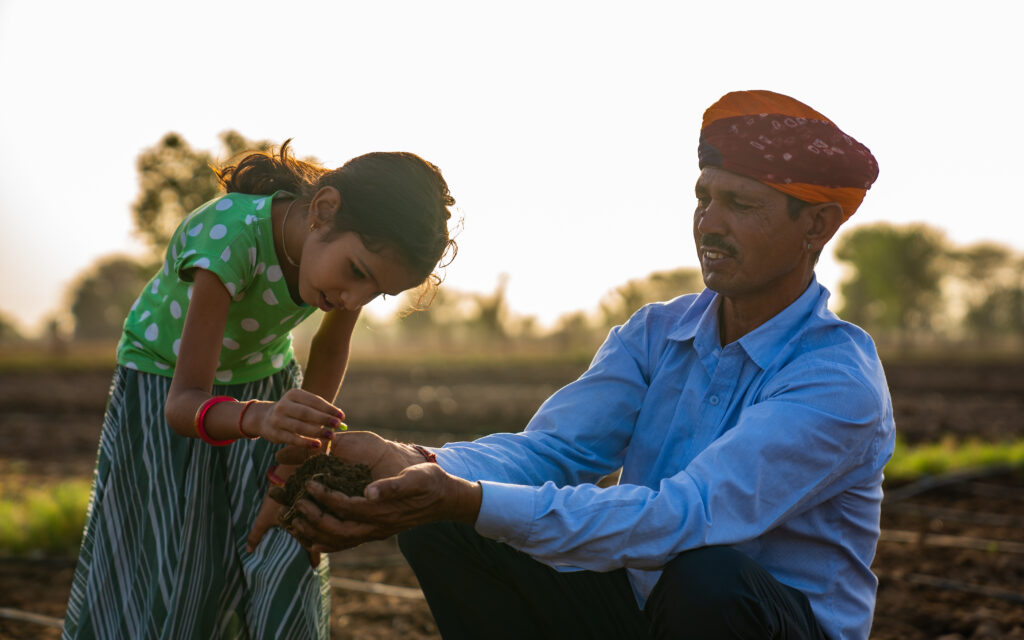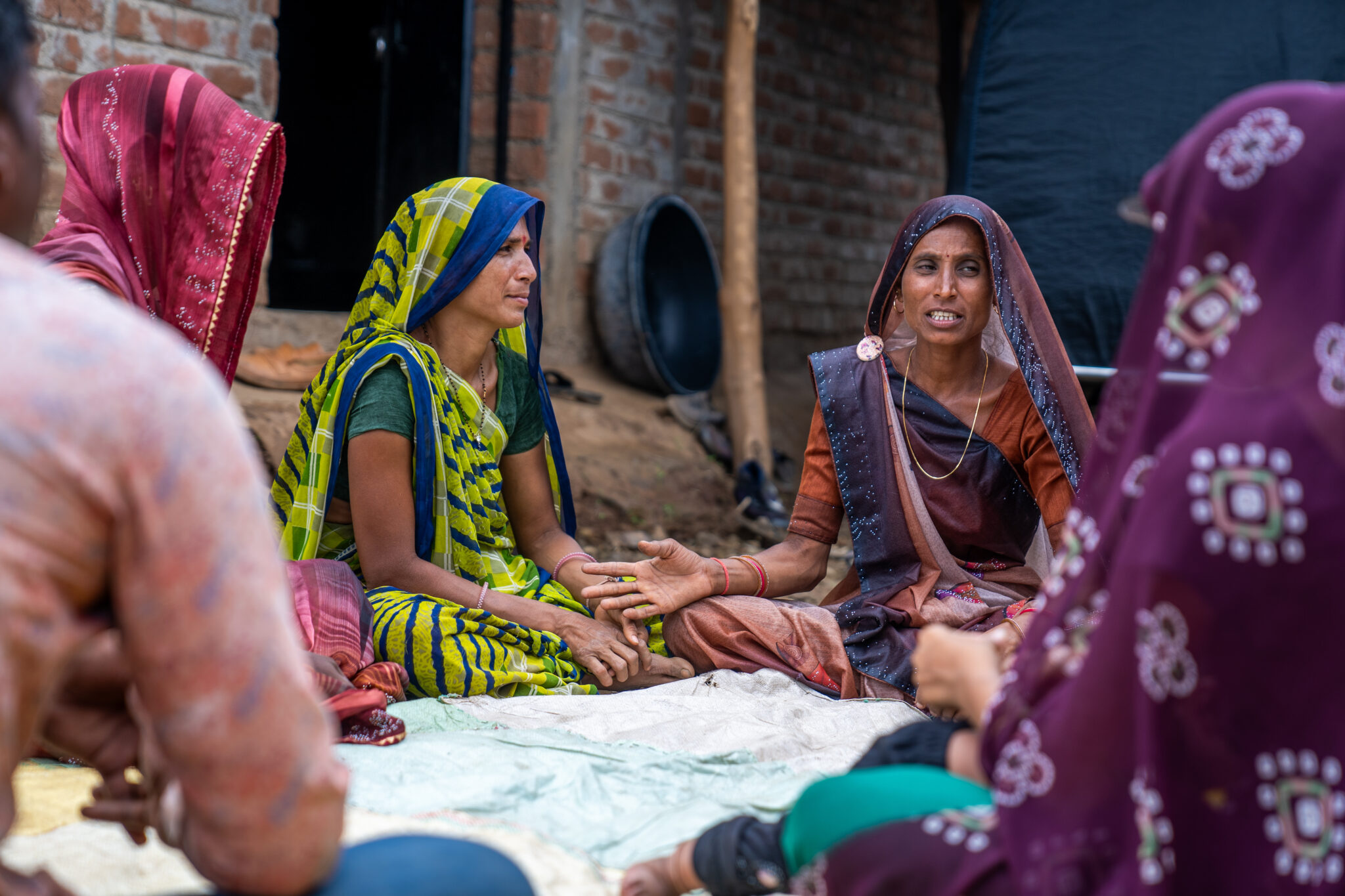
The floor was finally theirs. At this year’s OECD Forum on Due Diligence in the Garment and Footwear Sector the Better Cotton Initiative (BCI) and Organic Cotton Accelerator (OCA) brought India’s smallholder cotton farmers, too often the unheard backbone of global supply chains, into the Human Rights and Environmental Due Diligence (HREDD) conversation.
The session: Invisible no more: Elevating India’s cotton growers’ voices in HREDD, brought together smallholder cotton farmers from across India, alongside representatives from brands and civil society, creating a unique space for discussion. Moderated by Shankhamala Sen, Programme Implementation Manager at OCA India, and Saleena Pookunju, Senior Programme Manager at BCI, the discussion featured farmers from three Indian states: Gopalbhai Vashrambhai Charaniya (Gujarat), Pankjini Nial (Odisha), and Vaijanti Gokhale (Maharashtra), alongside Chandrakant Kumbhani of Ambuja Foundation and Claus Teilmann Petersen of BESTSELLER.
While this acronym might be unfamiliar to most farmers, the realities behind it are not. With clarity and confidence, all three farmers drew on practical examples, showing that meaningful progress depends on long-term investment, fairer economic incentives, and approaches that reflect the pressures they face. Their messages were clear, at times urgent, and always grounded in lived experience.
Gopal began by describing how environmental and social pressures are deeply intertwined and shape both livelihoods and community wellbeing. He pointed to the realities faced by semi-permanent migrant workers, from unsafe living conditions, risks from wildlife, and disruptions to children’s schooling.
″Women have historically been excluded from farm decision making, but change is underway.″
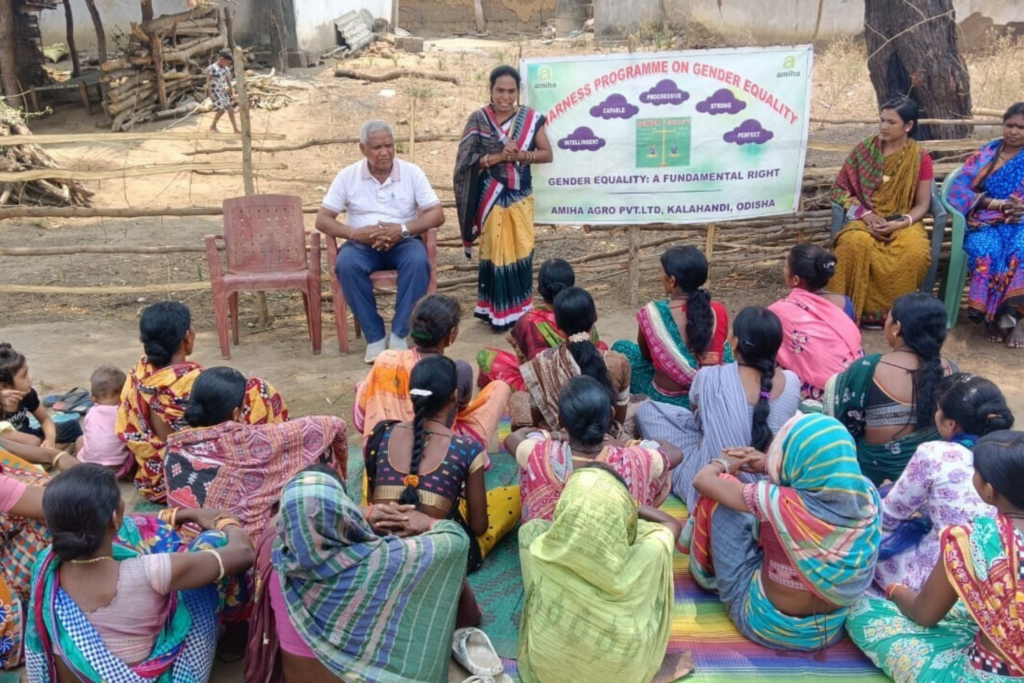
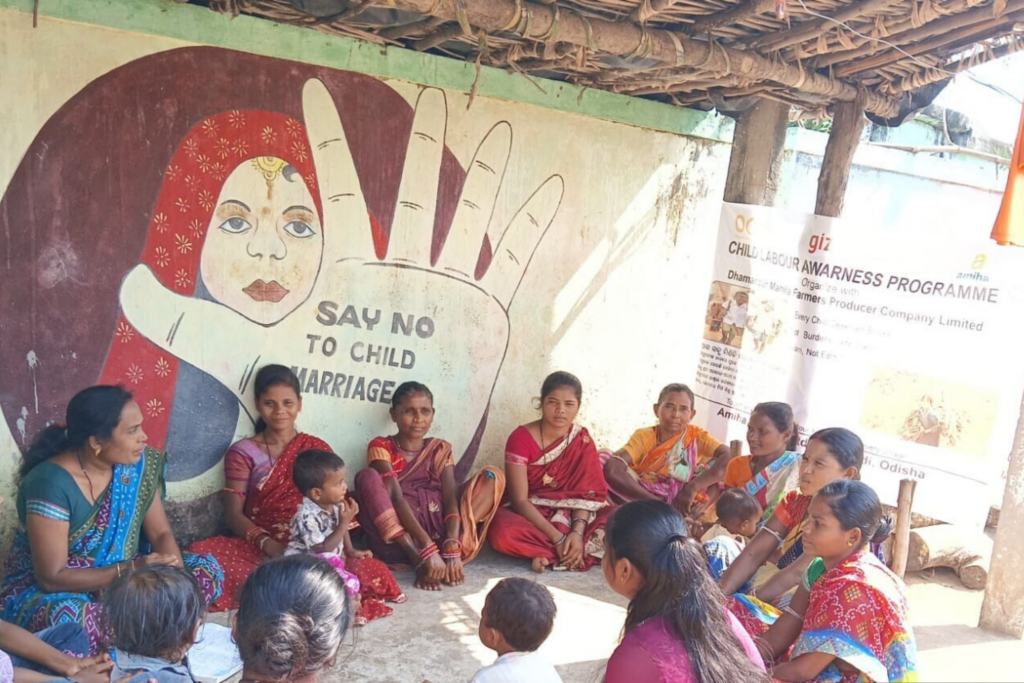
Pankajini reflected on the long history of women being excluded from farm decision-making. “Women have historically been excluded from farm decision-making,” she said, acknowledging how past barriers silenced women’s voices. Yet she emphasised that change is underway. Today, she works with 500 women farmers, training and mobilising them to help transform the fashion system, even as entrenched gender norms persist. OCA works with Implementing Partners to engage farmers like Pankajini in their organic cotton journey. Pankajini is supported by Amiha Agro, one of OCA’s Implementing Partners in India.
Vaijayanti added another dimension to the conversation, highlighting how market prices often fail to reflect the effort required to farm sustainably. She also stressed the importance of using natural inputs to improve soil health and support effective crop rotation, reinforcing the long-term benefits of regenerative practices.
Offering a broader perspective, Chandrakant Kumbhani, Chief Operating Officer at Ambuja Foundation, noted that the sector is gradually moving in the right direction as farmers prepare to transition toward sustainable and regenerative practices. He stressed that farmers are not navigating this shift alone. The Government of India is placing significant emphasis on change management and promoting natural farming across the country. When these public efforts are reinforced by sustained engagement from supply chain partners, including brands, implementers and civil society, support can be layered in ways that drive tangible and lasting impact in farming communities.
″The transition requires shared responsibility across brands, civil society and trade unions, rather than solely targeting a few large companies.″
Echoing this, Claus Teilmann Petersen, Stakeholder Engagement and Human Rights Manager at BESTSELLER, highlighted that while most brands and civil society efforts remain focused on the factory tiers, risk assessments show the largest challenges occur deep in the supply chain, at the farm and ginning levels. Claus reminded that the transition requires shared responsibility across brands, civil society and trade unions, rather than solely targeting a few large companies. He also emphasised the role of multi-stakeholder initiatives in ensuring farm-level efforts translate into meaningful due diligence, support transitions to regenerative practices, and achieve real impact on the ground, even in a market that does not always reward such efforts.
Together, their perspectives reinforced a clear message: lasting progress in HREDD depends on coordinated action across the entire supply chain.
Due diligence cannot succeed if the burden is pushed down the supply chain. This is growing concern that smallholders are increasingly being positioned as duty-bearers, despite due diligence being, by definition, a responsibility of the companies and private-sector actors. The opportunity truly lies in supporting farmers through knowledge-sharing, capacity strengthening and co-creation of ecosystems that work for them and that enable everyone to identify and address risks collaboratively.
BCI and OCA reiterated that due diligence is only credible when it starts at the farm level, reflecting the realities and contexts of agricultural production and recognising the often-invisible leadership of farmers.
The session closed with the audience committing to concrete actions before the next cotton harvest, including:
- Further strengthening local capacity for Human Rights and Environmental Due Diligence
- Adopting integrated ecosystem approaches to better align environmental and social considerations
- Promoting context-based assessments, acknowledging that agricultural risks vary significantly across regions
- Strengthening support for farmer organisations to participate meaningfully in due diligence processes
These reflections point to a growing consensus: effective due diligence requires more than-risk assessments and stronger local systems. It requires genuine space for farmers to participate, co-create solutions, and build the relationships and trust to influence the solutions that affect them.
As multistakeholder initiatives, BCI and OCA remain committed to ensuring that the people who grow cotton, and those who support them, are heard, recognised, and included in shaping the future of the sector.
And if this year showed that it is possible to bring farmers’ voices into the OECD Forum, navigating interpretation across languages and the inevitable technical complexities of online participation, the next ambition is clear: farmers not just online, but on stage, with a seat at the table where their expertise belongs.
By Hélène Bohyn, Policy and Advocacy Manager at the Better Cotton Initiative, and Ioana Bețieanu, Communications and Public Affairs Director at Organic Cotton Accelerator
Missed the session? The recording is available to registered participants via the Zoom link until 26 February. It will also be available on the OECD website soon.